How Personal Alarms Are Used
Most people carry a personal alarm on their keys or clipped to a bag so it is within reach the moment something feels wrong. Pull the pin or press the button and the alarm sounds immediately — no fumbling, no hesitation. The sudden noise startles an attacker, alerts people nearby, and shifts attention to you at the exact moment you need it. That is the whole point: make yourself hard to ignore when it matters most.
Choosing the Right Personal Alarm for You
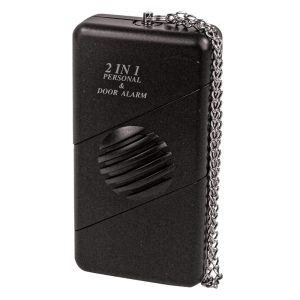
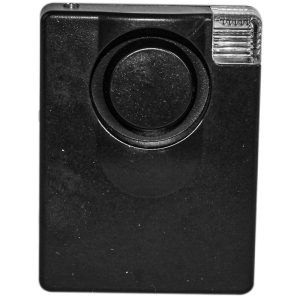
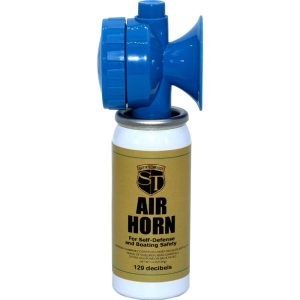
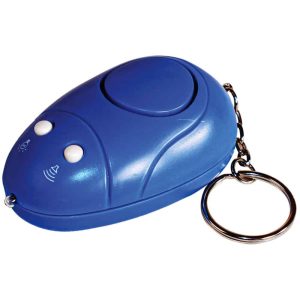
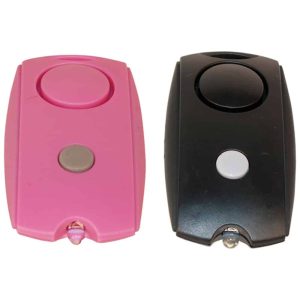
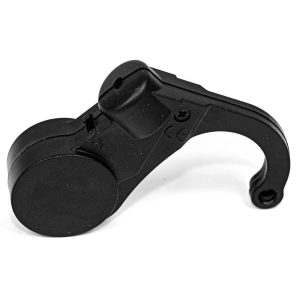
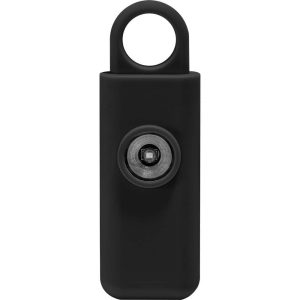
Personal alarms vary in how they activate — some use a pull-pin, others a push-button, and a few include a built-in flashlight or a door-stop function for added security in hotel rooms or dorm spaces. Think about where you will carry it and how fast you can reach it under stress. A keychain model works well for daily commuters. A wristband style suits runners and walkers. A door-alarm model is a smart addition for anyone who travels or lives alone.
What to Know Before You Buy
Personal alarms are legal everywhere in the United States — no permits, no restrictions, no age requirements. They are one of the few self-defense options you can hand to a ten-year-old or a ninety-year-old with equal confidence. The devices we carry are tested for sound output and battery reliability, and most run on standard batteries that are easy to replace. If you are buying for someone else — a parent, a college student, a coworker on the night shift — you are making a straightforward, meaningful choice that costs very little and could matter enormously.
Frequently Asked Questions About Personal Alarms
- How loud are personal alarms?
- Most personal alarms in this category produce between 120 and 130 decibels. To put that in context, 120 decibels is roughly as loud as a live rock concert or a thunderclap at close range. That level of sound carries far, attracts immediate attention, and is physically uncomfortable for anyone standing close to it — all of which works in your favor.
- Are personal alarms legal to carry?
- Yes. Personal alarms are legal to carry in all 50 states with no permits, licensing, or age restrictions required. They are one of the most accessible self-defense tools available, which is a big part of why they are a strong first option for young people, seniors, and anyone who is not comfortable with other self-defense tools.
- Do personal alarms actually stop an attacker?
- A personal alarm does not physically stop anyone — that is not what it is designed to do. What it does is change the situation fast. The sudden, sustained noise draws attention from bystanders, disrupts the attacker's focus, and creates an opening for you to get away. In most threat scenarios, that window is exactly what you need.
- How long does a personal alarm battery last?
- Battery life varies by model, but most personal alarms will run continuously for 30 minutes or more once activated. In normal carry — where the alarm is not activated — a fresh battery can last a year or longer. Check the product specs for the specific model you are considering, and replace batteries once a year as a habit.
- Can children and elderly people use personal alarms?
- Absolutely, and honestly they are among the people who benefit most. Personal alarms require no strength, no coordination, and no prior training — just the ability to pull a pin or press a button. They are widely recommended for children walking to school, seniors who live or travel alone, and anyone who may struggle to use other forms of self-defense quickly under pressure.
- Where is the best place to carry a personal alarm?
- The best place is wherever you can reach it in under two seconds without looking for it. Most people clip theirs to a keychain, a bag strap, or a belt loop. If it is buried in a purse or backpack, it is not much use in an urgent moment. Keep it visible, keep it accessible, and make a habit of knowing exactly where it is before you step out the door.
Related Categories and Guides