


Nap Alarm – 80dB Head-Tilt Drowsy Driving Alert
$9.95
Buy with Confidence
Covered by a 30-Day Money Back Guarantee. If it's not right for you, returns are easy and hassle-free.

Secure checkout • 100% Satisfaction Guaranteed • 30 Day Money Back Guarantee • Easy Returns • Fast Customer Support
The Nap Alarm hooks over your ear, reads the angle of your head, and fires an 80dB wake-up alert the instant you start to nod — no app, no phone, no setup required.
That stretch of road at 2 in the morning — the one where the lane markers blur together and your eyes start closing before you realize it — is where this little device earns its keep. My cousin Darnell drives overnight freight runs three times a week, and his wife begged him for years to be careful on those late hauls. He picked up the Nap Alarm and it changed the conversation in their house. Simple as that. At $9.95, the Nap Alarm costs less than a fast-food combo, fits over your ear like a wireless earpiece, and gives you a fighting chance against one of the most dangerous things a person can do — drive while their body has already started shutting down.
Who This Personal Alarm Is For
This is for the trucker who has a delivery window that doesn’t care how tired he is. For the hospital worker heading home after a twelve-hour night shift. For the parent who just drove the family back from a long weekend and has forty miles left. For the college student pushing through finals week who still has to get across town. If you have ever caught yourself snapping awake at the wheel and felt that cold jolt of fear — this was made for you. It is not for passengers, for home use, or for situations where you can simply pull over and sleep. It is built for the road, for the people who do not always have the option to stop.
Is It the Right Fit for You?
Choose It If You Want
- An instant, automatic alert the moment your head starts to drop
- Something that works without a phone, an app, or any setup
- A tool small enough to live in your glove box until the night you actually need it
- A one-time cost with no subscription, no refill, no ongoing expense
Consider Another Option If You Need
- A hands-free device that monitors multiple drowsiness signals beyond head angle
- Something integrated into your vehicle’s existing safety system
- A wearable that tracks sleep patterns over time and connects to your phone
Nap Alarm Features and Benefits
- Head-Tilt Sensor: Detects the forward angle of your head the moment sleep starts pulling it down — triggering the alarm before you drift, not after.
- 80dB Ear-Worn Alert: Sounds directly at your ear at 80 decibels, cutting clean through road noise and the fog of exhaustion to bring you back fast.
- Ear-Hook Design: Sits over one ear the way a Bluetooth earpiece does — out of the way, compatible with glasses, and secure enough that it stays put on the road.
- Battery Included: Three AG3 alkaline button cell batteries are already inside. You open the box and put it on. That’s it.
- No App, No Phone, No Connectivity: This device does one thing and does it on its own. Nothing to pair, nothing to update, nothing to fail because your signal dropped.
- Compact and Portable: At 1 7/8 by 2 1/4 by 5/8 inches and just 0.06 lbs, it disappears into a glove box, a center console, or a jacket pocket.
- One-Time Cost: Nine dollars and ninety-five cents. No recurring charges. No replacement cartridges. Just a tool that is ready when you are.
How the Nap Alarm Compares
There are a few ways people try to fight drowsy driving. Here is how they stack up against what this device actually does.
| Feature | Nap Alarm | Caffeine or Energy Drinks | Rumble Strips and Lane Alerts |
|---|---|---|---|
| Alert Trigger | Head-tilt sensor, automatic | None — you judge when to use it | After vehicle drifts from lane |
| Cost | $9.95 one-time | $3–$5 per use, ongoing | Built into road; not portable |
| Works Anywhere | Yes — any road, any vehicle | Yes, but effect is unpredictable | Only where strips are installed |
| Setup Required | None | None | None — but you have no control |
| Best For | Proactive, personal protection | Short-term alertness boost | Highway driving only |
Care and What’s Included
What’s in the Box
- Nap Alarm ear-worn device (black)
- 3 AG3 alkaline button cell batteries, pre-installed
Charging and Care
The Nap Alarm runs on the three included button cell batteries — no charging cable needed. Keep it dry, store it somewhere accessible like a glove box or center console, and check the battery periodically if you’ve had it a while without using it.
Nap Alarm: Frequently Asked Questions
How does the Nap Alarm know when I’m falling asleep?
It reads the angle of your head. When you are alert and driving upright, the device stays quiet. The moment your head tilts forward the way it naturally does as sleep pulls you down, the sensor triggers and the alarm fires. It does not require you to press anything or make any decision — it reacts before you are aware enough to react yourself.
How loud is the Nap Alarm’s alert?
The alarm sounds at 80 decibels directly at your ear. That is comparable to a loud alarm clock placed right beside your head — enough to cut through road noise, a running engine, and the heavy fog of near-sleep. The placement at your ear is intentional: the sound reaches you directly rather than competing with the rest of the cab or car interior.
Do I need my phone or an app to use the Nap Alarm?
Not at all. The Nap Alarm operates entirely on its own. There is no Bluetooth pairing, no app to download, no Wi-Fi required. You put it on, you drive, and it watches your head angle for you. That simplicity is part of what makes it reliable — there is nothing to fail, freeze, or run out of storage.
How long do the batteries last in the Nap Alarm?
The device runs on three AG3 alkaline button cell batteries that come pre-installed. Battery life will vary based on how often you use it and how long you wear it per trip. Because it is a passive sensor that only triggers the alarm when needed, the draw is minimal during normal use. Keep a spare set of AG3 batteries in your glove box so you are never caught without power on a long haul.
Add This Alert to Your Driving Routine
Slip it in your glove box tonight. The next time you are thirty minutes from home and your eyelids are making decisions your brain hasn’t approved, you’ll be glad it’s there. Add it to your cart and let it ride with you — because getting home is the only destination that matters.
| Decibles | 80 db |
|---|---|
| Battery | 3 AG3 Alkaline Button Cell (Included) |
| Color | Black |
| Weight | 0.06 lbs |
| Dimensions | 1 7/8" x 2 1/4" x 5/8" |
Additional information
Related products
-
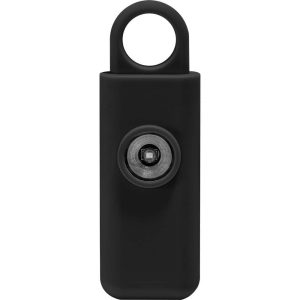
Personal Panic Alarm – 130dB Siren, 350-Lumen Strobe
$15.00 Select options This product has multiple variants. The options may be chosen on the product page -
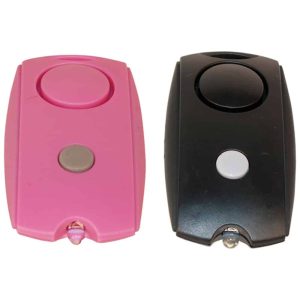
Mini Personal Alarm – 120dB Siren with LED Flashlight
$8.95 Select options This product has multiple variants. The options may be chosen on the product page -
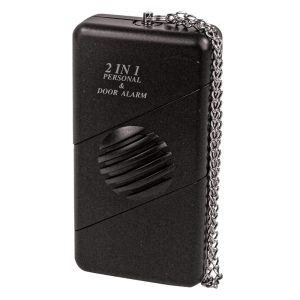
2-in-1 Personal and Door Alarm – 120dB, Pull Chain
$10.95 Add to cart -
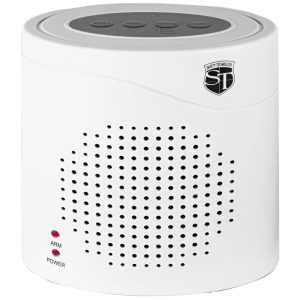
Barking Dog Alarm – 120dB, 3 Modes, 50-Foot Range
$79.95 Add to cart
Reviews
There are no reviews yet.