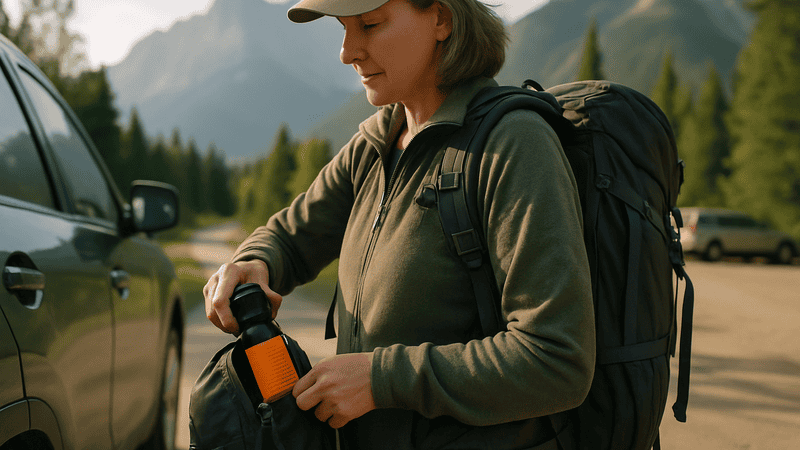
Bear spray is a pressurized canister with a specific temperature range — usually between -40°F and 120°F depending on the brand — and storing it outside that range can cause it to underperform, leak, or in rare cases rupture. The single biggest mistake people make is leaving it in a hot car, where interior temperatures can climb past 150°F even on a mild day. Store it in a cool, stable spot, check the expiration date every season, and never assume a canister that’s been baking in your glove box will work the way it’s supposed to when you need it.
Why does bear spray have a temperature limit at all?
Bear spray works because it’s pressurized. That pressure is what sends the spray out in a wide, fast-moving cloud that can cover ground and put real distance between you and whatever’s coming at you. Heat and cold both mess with that pressure — and pressure is not something you want messed with in a canister you’re carrying on your hip.
Here’s what I want you to understand, plainly: when a canister gets too hot, the pressure inside builds beyond what it’s designed to hold. Most manufacturers rate their canisters up to around 120°F. Past that, you’re rolling the dice on a seal failure, a slow leak, or in worst cases, a rupture. When it gets too cold — well below freezing, depending on the formula — the spray thickens, the pressure drops, and what should be a ten-foot stream might dribble out three feet in front of your boots. Neither situation is one you want to discover mid-encounter with a bear or a person.
This is exactly why I trust the people I love with equipment I actually understand — not just equipment I sell. If you’re curious how long a can actually lasts once you pull the trigger, our post on bear spray canister duration and how many seconds you actually get breaks down what those precious seconds look like in real use, and it matters even more when you know the can’s been stored right.
Can I leave bear spray in my car?
No — and this is the mistake I see most often. A parked car is one of the worst places you can store bear spray, even for a short errand. On a 75°F day, the inside of a closed car can reach 120°F or higher within thirty minutes. On a 90°F day in July, you’re looking at temperatures north of 150°F within the hour. That’s well past the danger zone for most canisters on the market.
I know the convenience of it. You toss the can in the console before a hike and forget about it until next season. But that console becomes an oven, and an oven is not where you want to store something under pressure. If you hike or camp regularly, keep your canister in an insulated pouch or a cooler bag inside the car, or better yet, bring it inside with you when you’re not actively using it.
The same logic applies to pepper spray you carry day to day — smaller canisters, same chemistry, same vulnerability to heat. If it lives in your car full time, it’s degrading faster than you think, whether you notice it or not.
What temperature is too cold for bear spray?
Most bear spray formulas start losing effectiveness somewhere around freezing, and by the time you’re deep into single digits, you can expect a real drop in spray distance and pressure. Cold doesn’t usually cause the dramatic failures that heat does — you’re not likely to see a rupture — but you are likely to get a weaker, shorter burst exactly when you need a strong one.
If you’re heading into cold-weather terrain — winter camping, early spring hikes at elevation, cold-climate trail work — keep the canister somewhere insulated and close to your body heat. Inside a jacket pocket, in an interior pack pocket near your back, somewhere it stays closer to room temperature than the outside air. I tell my hiking friends the same thing I tell anyone carrying pepper spray for night shift work in cold winter months — your body heat is doing you a favor if you let it.
How do I know if my bear spray has gone bad?
Check three things: the expiration date stamped on the canister, the overall condition of the seal and trigger, and whether the canister feels like it’s holding pressure. Most bear spray is rated for about four years from manufacture, and the date is usually printed right on the label — no guessing required.
Beyond the date, look for any sign of rust, dents, or a seal that looks swollen or warped. If a canister has ever been exposed to serious heat — say, forgotten in a car during a heat wave — I’d retire it early, even if the expiration date says you’ve got time left. Trust your judgment here, not just the stamp. A canister is a tool, and like any tool, its condition matters more than its birthdate.
This is also a good moment to build a habit: check your gear the same way, every season, the way you’d check smoke detector batteries. Spring and fall are natural checkpoints. Pull out your canister, check the date, check the seal, and replace if anything feels off. It takes thirty seconds and it’s the kind of small, steady discipline that keeps you safe without you having to think hard about it.
Where’s the safest place to store bear spray at home?
A cool, dry, stable-temperature spot — a closet, a drawer, a cabinet away from direct sunlight or heating vents. You want consistency more than you want cold. Wild temperature swings, hot in the afternoon and cool at night, stress the canister more over time than a steady moderate temperature ever will.
Keep it somewhere you’ll actually remember, too. I’ve talked to people who stored their canister so carefully — back of a closet, bottom of a storage bin — that they couldn’t find it fast when they actually needed to grab it and go. Safety only works if it’s accessible. A belt clip design solves this for daily carry, but for a bear spray canister you’re not wearing constantly, pick a spot that’s both temperature-stable and within arm’s reach when you’re packing for a trip.
What actually happens if bear spray overheats and fails?
At best, a compromised canister sprays weaker than it should — shorter distance, thinner cloud, less coverage. At worst, a canister that’s been severely overheated can develop a stuck valve, a slow leak that empties the can before you ever need it, or in rare extreme cases, a seal failure. None of these are things you want to learn about in the moment you’re counting on that canister to work.
I’ve built my whole business on the belief that preparation is love — checking your gear before you need it is exactly that. A canister sitting quietly in a hot glove box for two summers isn’t doing anybody any favors, and it’s giving you false confidence, which might be worse than having nothing at all. If you carry both bear spray for the trail and pepper spray for everyday life, treat them with the same respect. Our guide on pepper spray gel versus stream versus fog covers how different formulas hold up under different conditions, which is worth knowing before you pick what to carry into extreme heat or cold.
Frequently Asked Questions About Storing Bear Spray Safely
What is the maximum temperature bear spray can be stored at?
Most bear spray canisters are rated up to around 120°F, though this varies slightly by manufacturer and formula. Check the printed label on your specific canister for the exact rating. Beyond that temperature, pressure inside the can builds past its designed limit, increasing the risk of leaks or seal failure.
Can bear spray explode in a hot car?
It’s rare, but possible under extreme, sustained heat. More commonly, an overheated canister develops a slow leak or a weakened seal rather than a dramatic rupture. Either way, a canister that’s been cooked in a hot car should be considered unreliable and replaced, even if it looks fine on the outside.
Does cold weather ruin bear spray?
Cold weather doesn’t usually ruin bear spray outright, but it does reduce spray distance and pressure once temperatures drop near or below freezing. For cold-weather trips, carry the canister close to your body, in an inner jacket pocket or pack compartment, to keep it closer to normal temperature.
How long does bear spray last before it expires?
Most canisters are rated for about four years from the manufacture date, which is printed directly on the label. Heat exposure, physical damage, or a compromised seal can shorten that lifespan significantly, so the printed date should be treated as a maximum, not a guarantee.
Is it safe to keep bear spray in a hot glove compartment?
No. A glove compartment traps heat even more than the main cabin of a parked car, often exceeding safe storage temperatures within minutes on a warm day. If you need to keep bear spray in your vehicle, use an insulated pouch and avoid leaving the car parked in direct sun for extended periods.
How can I tell if my bear spray canister is still good?
Check the expiration date, inspect the canister for rust, dents, or a swollen seal, and consider its exposure history — has it ever been left in extreme heat or cold? If anything looks off or you’re unsure of its storage history, it’s safer to replace it than to trust a questionable canister in a real emergency.
Should I test-fire my bear spray to check if it still works?
A short test-fire outdoors, away from people and pets, can confirm the canister still holds pressure, but do this sparingly since it uses up your available spray. Many people prefer to simply track the expiration date and replace canisters proactively rather than testing and reducing their available supply.
What’s the best place to store bear spray between trips?
A cool, dry, temperature-stable spot indoors — a closet or drawer away from direct sunlight and heating vents — works best. Avoid storage spots with big daily temperature swings, and keep the canister somewhere accessible so you can grab it quickly when you’re packing for your next outing.
The Bottom Line
I’ve spent years telling my neighbors and my own family the same thing: a safety tool is only as good as the care you put into keeping it ready. Bear spray is no different. Store it right, check it every season, and never let a hot car or a forgotten glove box turn a reliable canister into a gamble. That’s not fear talking — that’s just good sense, the kind I’d want for anyone I love heading out onto the trail or walking home after dark.
If you’re building out your everyday protection alongside your outdoor gear, take a look at our pepper spray gift set for a thoughtful way to get a loved one started, or browse options designed specifically for elderly family members who deserve the same peace of mind. Take care of your gear, and it’ll take care of you when it counts.