Yes, pepper spray works on bears — but only a specific kind, in a specific concentration, deployed a specific way. Standard personal defense spray carried for human attackers is not sufficient for a bear encounter. Bear spray is its own category of product, built to a different standard, and understanding that difference is what separates a prepared hiker from someone who walked into the wilderness with misplaced confidence.
What makes bear spray different from regular pepper spray?
This is the question worth asking before you buy anything, and most people skip it entirely. They see “pepper spray” on a shelf, assume it’s all the same, and head into the backcountry with a product designed to stop a 180-pound person — not a 400-pound grizzly with two inches of fat and muscle between it and its nervous system.
Bear spray and human defense spray share the same active ingredient: oleoresin capsicum, or OC — the compound extracted from hot peppers that causes intense burning in the eyes, nose, throat, and respiratory system. But the similarities end there. The EPA regulates bear spray as a pesticide and sets a minimum concentration requirement of 1% to 2% major capsaicinoids — the specific sub-compounds within OC that do the work. Most quality bear sprays run at 1% to 2% major capsaicinoids, while human defense sprays typically measure their strength in total OC percentage, which is a different and less precise metric entirely.
Beyond chemistry, the delivery system is different. Bear spray canisters are larger — typically 7 to 9 ounces — and designed to deploy a wide fog-cloud pattern that covers a large area quickly. You are not aiming at a precise target. You are creating a wall of deterrent between yourself and an animal charging at roughly 35 miles per hour. A small keychain canister with a narrow stream pattern is not going to do that job. The physics simply don’t allow it.
There is also the matter of range. A quality bear spray deploys at 20 to 30 feet. You want to begin your deployment before the bear reaches you, not after. That distance requirement alone eliminates most personal defense products from the conversation.
Has bear spray actually been proven to stop bear attacks?
This is where the science becomes genuinely compelling, and it is worth knowing before you decide what to carry. A study published in the Journal of Wildlife Management, drawing on documented bear encounters in Alaska over a 20-year period, found that bear spray was effective in stopping a bear’s undesirable behavior in 92% of cases involving brown and black bears. In comparison, firearms — even in the hands of experienced users — showed notably lower rates of effectiveness in close-range surprise encounters, partly because of the time required to aim and fire at a fast-moving animal.
The U.S. Fish and Wildlife Service recommends bear spray as the most effective deterrent for bear encounters. The National Park Service carries that same recommendation. These are not casual endorsements — they reflect decades of field data from rangers, researchers, and outfitters who have watched the results firsthand.
What the data also shows is that the encounters where bear spray failed were often cases where it was deployed too late, deployed upwind of the user, or involved a canister that was not readily accessible. The product worked. The preparation did not. That distinction matters enormously.
What concentration of pepper spray is required to deter a bear?
The EPA standard is a floor, not a ceiling. Bear sprays certified for use against bears must contain a minimum of 1% major capsaicinoids — that is the regulatory minimum. Quality bear sprays meet or exceed that threshold. When you are evaluating a product, look for the major capsaicinoids percentage listed on the label, not just the OC percentage. Those are different numbers.
Major capsaicinoids are the active fraction of the OC compound — the part that actually triggers the physiological response. A spray advertising “10% OC” sounds impressive, but if only a fraction of that OC concentration consists of major capsaicinoids, the effective strength is considerably lower than the headline number suggests. This is the detail that separates an informed buyer from someone who picked something off a shelf because the label looked serious.
When shopping for bear spray specifically, look for EPA-registered products that clearly state major capsaicinoid concentration. This is the mark of a product built for the actual purpose — not one borrowing the bear-country reputation of the category.
Does regular pepper spray work on bears in an emergency?
Honestly, the short answer is: possibly, but you should not bet your life on it. Personal defense spray formulated for human attackers lacks the spray volume, the range, and in many cases the capsaicinoid concentration to reliably stop a charging bear. A bear does not experience pain the way a human attacker does, and its anatomy creates additional barriers to the spray reaching the mucous membranes where OC causes its most acute effects.
That said, if a person is in bear country with no bear spray and a bear charges, discharging any OC product toward the bear’s face is a reasonable attempt. Doing nothing is the worst option. But this is a scenario you should never find yourself in, because it means you came prepared for the wrong problem.
The people who plan carefully — who distinguish between their everyday belt clip pepper spray for personal safety in urban environments and the bear spray they pack specifically for wilderness trips — are the people who come home from both situations. Good preparation means carrying the right tool for each environment. Not one tool for everything.
Where should you carry bear spray on a hike, and how do you deploy it properly?
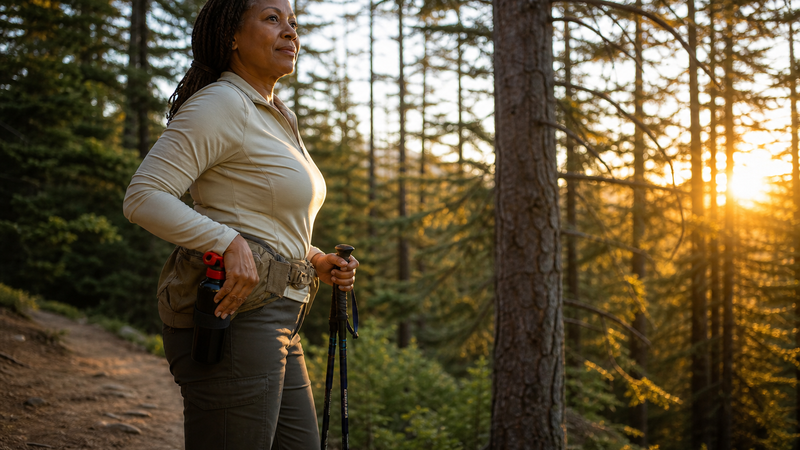
Bear spray that lives at the bottom of your pack is nearly worthless. In a charging bear scenario, you have seconds — sometimes less. The spray must be on your body, accessible with one hand, not buried under your rain jacket and a three-day food supply.
Most experienced backcountry hikers carry bear spray in a chest holster or hip holster that allows for an immediate draw. The holster should be secure enough not to rattle loose on a trail but quick enough to deploy in under two seconds with a practiced hand.
Deployment technique matters as much as access. When a bear is charging, you begin spraying at approximately 60 feet — or the outer range of your product. You create a cloud, not a stream aimed at the bear’s eyes. You want the animal to run into the fog. If the wind is at your back, you spray across your path and move perpendicular to the cloud. If the wind is in your face, you are at a disadvantage and need to adjust your position before spraying.
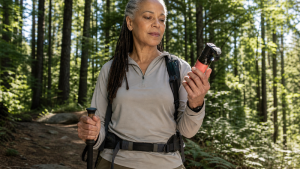
Practice the draw before you need it. Take the safety clip off and put it back on. Know which hand goes where. Muscle memory built before the encounter is what saves you during it.
If you are looking for everyday carry options for personal safety closer to home, the same principle applies — accessibility and readiness over novelty. Whether you are heading out on a night run or a solo hike, the right product ready to hand is always the one that works. That is why I recommend pepper spray for night shift workers and solo runners on my site — different contexts, same principle of deliberate preparation.
Are there other precautions that work alongside bear spray in bear country?
Bear spray is the single most effective active deterrent, but it operates best within a broader approach to backcountry safety. Rangers and wildlife biologists consistently recommend the following alongside proper spray carry:
Make noise on the trail. Most bear encounters happen because the bear was surprised. A surprised bear is a dangerous bear. Talking, clapping periodically, and calling out “hey bear” around blind corners gives wildlife the opportunity to move away before contact occurs. This alone eliminates the majority of potential encounters.
Store food properly. A bear that has been conditioned to associate people with food is a far more dangerous animal than a wild bear with no human associations. Bear canisters and bear boxes at established campsites are not optional — they are part of the responsibility of entering that environment.
Travel in groups. Solo hikers are statistically more likely to surprise bears and less likely to deter them by presence alone. Groups of four or more represent the safest configuration in high-density bear territory.
Know the difference between a defensive charge and a predatory approach. A defensive charge — most common with a startled bear or a mother protecting cubs — often ends in a bluff stop. A slow, quiet approach from an animal that has noticed you and is still coming is a different situation entirely and warrants immediate spray deployment. Rangers in Yellowstone and Glacier train on this distinction because it changes the optimal response.
None of these precautions replace bear spray. They are the context in which bear spray performs best. If you are heading into known bear territory, you want all of it working together — and if you are looking to build out a full personal safety kit for the trails, I have options worth browsing when you order pepper spray online through Tracey’s Safety.
For those of you who run trails or carry personal defense spray for exercise — and if you have been wondering how your current setup compares to what you actually need in different environments — this piece on personal alarms vs. pepper spray for runners is worth your time.
Frequently Asked Questions About Pepper Spray and Bears
Is bear spray the same as pepper spray?
No. Both use oleoresin capsicum as the active ingredient, but bear spray is an EPA-regulated product with a minimum major capsaicinoid concentration of 1% to 2%, a larger canister volume (7 to 9 ounces), a wider fog-cloud spray pattern, and a range of 20 to 30 feet. Personal defense sprays designed for human attackers are smaller, shorter-range, and not formulated or tested for stopping a bear.
How effective is bear spray against grizzly bears specifically?
Research published in the Journal of Wildlife Management found bear spray effective in stopping aggressive bear behavior in over 90% of documented encounters, including with grizzly bears. The U.S. Fish and Wildlife Service and National Park Service both recommend bear spray as the most effective deterrent for grizzly encounters. Effectiveness depends on proper deployment — correct range, wind awareness, and immediate accessibility.
Can I use my regular keychain pepper spray if a bear charges me?
Standard personal defense spray is not recommended as a reliable bear deterrent. The canister is too small, the range is too short, the spray pattern is too narrow, and the concentration may be insufficient for the physiological effect needed to stop a bear. If it is all you have in an emergency, discharging it toward the bear’s face is better than nothing — but you should not enter bear country relying on personal defense spray.
What percentage of OC should bear spray contain?
Look for major capsaicinoids concentration, not total OC percentage — these are different measurements. The EPA requires a minimum of 1% major capsaicinoids in certified bear spray. Many quality bear sprays run between 1% and 2% major capsaicinoids. Avoid being misled by high OC percentage claims without a corresponding major capsaicinoids figure listed on the label.
How close does a bear need to be before you deploy spray?
Begin deploying bear spray at approximately 60 feet, or at the outer range of your specific product. You are not aiming at the bear precisely — you are creating a fog cloud the bear will run through. Starting too early wastes product and reduces the cloud concentration; starting too late reduces your margin. Know your product’s rated range before you are on the trail.
Does bear spray expire?
Yes. Most bear spray canisters carry a manufacturer expiration date, typically three to four years from production. An expired canister may have lost propellant pressure, which reduces range and spray volume significantly. Check your canister before every trip. If it is expired or the pressure indicator shows low, replace it — this is not the product category where you cut corners.
Should I carry both bear spray and personal defense pepper spray when hiking in bear country?
If you are hiking in an area with both wildlife risk and human risk — remote trails, parking lots near trailheads, campgrounds — carrying both is a reasonable approach. Use bear spray for wildlife encounters and personal defense spray for close-proximity human threats. Keep each accessible and know which is which. An everyday carry option like a belt clip pepper spray pairs well with a hip-holstered bear canister for dual preparedness.
What should I do if I accidentally discharge bear spray on myself?
Move immediately upwind to fresh air. Remove contaminated clothing without spreading the OC to your eyes or face. Flush affected skin and eyes with large amounts of cool water — do not use soap initially, as it can drive the OC deeper into pores. The burning will subside over 30 to 45 minutes. Do not rub affected areas. Bear spray is significantly more concentrated than most personal defense products, so take accidental exposure seriously and seek medical attention if respiratory symptoms develop.
The people who walk into bear country with the right product, stored in the right place, deployed the right way, are the people who walk back out. That is the whole standard worth meeting. If someone you love is planning a backcountry trip, a wilderness run, or time in any area where bears are part of the landscape, the right bear spray — carried correctly — is one of the most considered gifts you can give them. Browse what we carry at Tracey’s Safety pepper spray gift sets and find what fits the person and the purpose.
Do your research. Buy the right product. Know how to use it before you need it. That is what real preparation looks like.