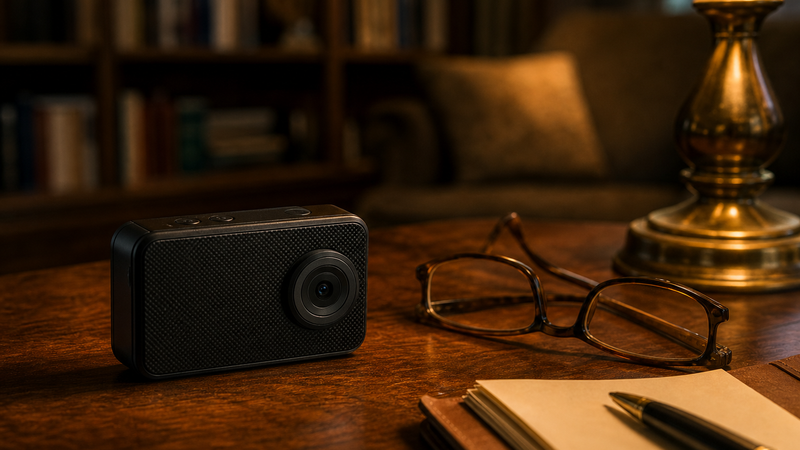
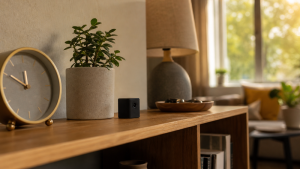
For identifying a caregiver’s face clearly on video, the hidden camera you choose must record at a minimum of 1080p Full HD resolution, have a wide-angle lens of at least 90 degrees, perform adequately in low-light or mixed indoor lighting, and store footage locally via SD card or transmit wirelessly to a secure app. Cameras disguised as everyday objects — alarm clocks, smoke detectors, picture frames, or USB chargers — can meet all of these standards while remaining completely invisible to the person being recorded.
If someone you love is in the care of another person inside their own home, you already understand the weight of that trust. You chose that caregiver carefully. You checked references. You asked the hard questions. And still — still — there is a part of you that needs to know. Not because you assume the worst, but because the people you love deserve more than your hope. They deserve your certainty. That is not paranoia. That is discernment. And discernment, when it comes to protecting the vulnerable, demands the right tools — not just any camera pulled from a shelf, but the right one, chosen for the right reasons.
What video resolution do you actually need to identify someone’s face on a hidden camera?
The honest answer is this: 1080p Full HD is your floor, not your ceiling. At 720p, a face captured from across a room — the distance between a caregiver and a bed, a wheelchair, a kitchen table — can blur into something unrecognizable the moment you try to zoom in during review. At 1080p, the same scene holds enough detail to identify a person, read an expression, and capture what is actually happening with clarity that holds up.
Some cameras now record at 2K or 4K resolution, and if you can find a discreet device in that range, it is worth the investment. The reason is simple: higher resolution footage survives digital zoom. If something happens in the corner of a frame and you need to enlarge that section, 4K footage gives you four times the pixel data of 1080p to work with. In a situation where the footage might be reviewed by someone other than you — a family member, a doctor, an attorney — that detail is not a luxury. It is the difference between evidence and uncertainty.
Frame rate matters nearly as much as resolution. A camera recording at 15 frames per second can produce choppy footage that misses a critical half-second of action. Look for cameras that record at 25 or 30 frames per second at full resolution. That smooth, continuous capture is what makes facial identification reliable rather than a matter of chance.
What lens angle gives you the best coverage without making the camera obvious?
A camera lens that is too narrow forces you to aim the device precisely — and that kind of deliberate positioning can look unnatural in a room. Most quality hidden cameras designed for indoor monitoring use lenses in the 90-to-120-degree range, and that is the right window for most home care situations. A 90-degree lens captures a focused view of a defined space: a hospital bed setup, a kitchen where medications are prepared, a sitting room where your family member spends their day. A 120-degree lens gives you wider peripheral coverage without significant distortion at the edges.
The mistake people make is prioritizing the disguise over the optics. A beautiful clock camera with a narrow, poorly calibrated lens gives you footage that is nearly useless for identification. Choose the disguise second. Choose the lens first. The best hidden cameras in this category balance both — a convincing everyday object with optics engineered for clarity, not just presence.
Placement works hand-in-hand with lens angle. A camera with a 90-degree field of view placed at eye level — on a bookshelf, an end table, or a dresser — can capture a face, hands, and body position simultaneously. Position matters. Read the specs before you decide where the device lives in the room.
How does low-light performance affect your ability to identify a face on a hidden camera?
This is where many hidden cameras fail quietly and expensively. Caregiving does not stop when the sun goes down. Nighttime care — late medications, repositioning, overnight check-ins — is often when the moments you most need to capture occur, and rooms are rarely well-lit at those hours. A camera that performs beautifully in daylight and produces dark, grainy, unidentifiable footage after 9 PM is not the camera you need.
Look for cameras with infrared night vision that activates automatically in low-light conditions. True IR night vision illuminates the room with infrared light invisible to the human eye, and produces footage that — while in black and white — is sharp enough to identify a face, read a person’s movements, and capture detail that matters. Some higher-end models now use starlight sensors, which can maintain color footage in very low light without switching to IR. That is a meaningful upgrade if it is within your budget.
Test footage in the actual lighting conditions of the room before you commit to placement. What looks adequate on a product demonstration video may not match the specific way light falls in your parent’s bedroom at midnight. Serious buyers evaluate in real conditions, not ideal ones.
What hidden camera disguises work best in a home caregiving environment?
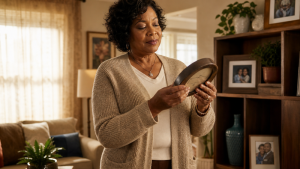
The best disguise is the one that belongs in the room without explanation. A camera concealed in an alarm clock belongs on a nightstand. A camera inside a smoke detector belongs on the ceiling and covers a wide area from above — an angle that captures faces looking up, which happens naturally in a care environment. A camera inside a picture frame belongs on a dresser or shelf and can be angled at the bed or chair where your family member spends their time.
USB wall charger cameras deserve particular mention because they are genuinely unremarkable. A phone charger in a bedroom or common room attracts zero attention and can be plugged into any outlet. Many models record continuously, loop when the SD card fills, and some offer motion-activated recording to preserve storage. For a bedroom or living area where a caregiver is regularly present, this is one of the most effective and least suspicious options available.
What you want to avoid is any disguise that feels out of place. A camera hidden in an object that has no business being in that room invites curiosity. Stick with objects that fit the environment naturally, and the camera effectively disappears.
If you are thinking through your broader home monitoring strategy, it is also worth reading about the best disguised cameras for catching nursing home abuse — many of the same principles apply whether care is happening in a facility or in a private home.
Should you choose a wired, wireless, or SD card hidden camera for monitoring a caregiver?
Each option has a specific strength, and the right choice depends on your situation. SD card cameras — sometimes called “offline” cameras — record directly to a memory card inside the device. They require no Wi-Fi connection, no app, and no network to operate. That makes them the most secure from a digital standpoint and the most reliable in homes where the Wi-Fi signal is inconsistent. The tradeoff is that you cannot view footage in real time; you retrieve the card and review later.
Wi-Fi connected hidden cameras allow you to monitor live from an app on your phone, receive motion alerts, and review footage remotely. That real-time visibility is valuable if you are not in the home during care hours. The consideration is that these cameras require a stable home network and their footage travels through it. If privacy is your primary concern, a local SD card camera keeps everything inside the home.
Wired cameras offer the most reliable, continuous recording with no battery or Wi-Fi dependency, but their installation is more involved and the cord — however discreet — must be managed carefully to avoid detection. For most home care monitoring situations, a Wi-Fi camera with local SD backup, or a high-quality offline SD camera, serves the need cleanly and professionally.
Whatever monitoring setup you choose for interior spaces, do not overlook your entry points. A hidden camera for your front door creates a complete picture — who comes in, when, and what they are carrying when they leave.
What storage capacity do you need to capture enough footage for review?
A 32GB SD card recording at 1080p with motion-activated capture can hold roughly 10 to 15 hours of footage depending on the camera’s compression. If care shifts run 6 to 8 hours, a 32GB card can manage two to three days of motion-triggered footage before it loops. For continuous recording, a 64GB or 128GB card extends that window meaningfully.
Motion-activated recording is worth serious consideration for two reasons. First, it stretches storage dramatically by only capturing when something is happening in the frame. Second, it makes review faster — instead of scrubbing through hours of an empty room, you are reviewing clips triggered by movement, which means the caregiver is in the frame for most of what you watch.
Whatever camera you choose, commit to reviewing footage regularly rather than waiting for a reason. Consistent, quiet review is how you catch the gradual — a pattern of rough handling, repeated shortcuts with medications, dismissive treatment that would not register on a single viewing but becomes undeniable across several days.
How do hidden cameras compare to visible security cameras for monitoring in-home caregivers?
A visible camera changes behavior. That is not a theory — it is documented and it is human. When a caregiver knows they are being recorded, they are more careful. Some families use visible cameras for exactly that reason: the deterrent effect. If you want to know whether that deterrent approach fits your situation, it is worth looking at visible and fake camera deterrent options as a first-line strategy.
But deterrence and documentation are not the same thing. If your concern is capturing what happens when no one is watching — the authentic behavior of a caregiver who believes they are unobserved — a hidden camera is the only tool that provides that. A visible camera provides compliance. A hidden camera provides truth. Which one you need depends entirely on what question you are trying to answer.
Many families use both: a visible camera at the front door or in a common area to establish the general presence of monitoring, and a discreet hidden camera in the primary care space to capture what actually happens. That layered approach reflects serious, thoughtful planning — the kind that comes from caring enough to do this right.
Frequently Asked Questions About Hidden Cameras for Monitoring Caregivers
What is the minimum video resolution needed to identify a face on a hidden camera?
1080p Full HD is the minimum resolution you should accept for face identification purposes. At 720p, digital zoom during review produces blurring that makes identification unreliable. If the footage might be used for any official purpose — medical, legal, or otherwise — 2K or 4K resolution gives you significantly more detail to work with and holds up better under scrutiny.
Is it legal to record a caregiver in your home without telling them?
Laws on recording in private spaces vary significantly by state. In some states, you are permitted to record in your own home without notifying anyone. In others, recording laws are more restrictive. You should consult a local attorney before placing any hidden camera in a caregiving situation. Nothing in this post constitutes legal advice — this is practical product guidance, not legal guidance.
How far away can a hidden camera clearly identify someone’s face?
This depends heavily on the camera’s resolution, lens angle, and the ambient lighting in the room. A quality 1080p camera with a 90-degree lens can capture identifiable facial detail from 6 to 12 feet under decent indoor lighting. In low light, effective range may shrink unless the camera has infrared night vision. Test your specific device in the actual room and lighting conditions before relying on it.
What hidden camera disguises are the least suspicious in a home care setting?
Alarm clocks, smoke detectors, USB wall chargers, and picture frames are the most naturally occurring objects in a bedroom or living area used for home care. The best disguise is one that belongs in the room without explanation. Avoid placing any camera inside an object that has no reason to be in that particular space — an out-of-place item invites a second look.
Should I use a Wi-Fi hidden camera or an SD card camera to monitor a caregiver?
If you want real-time alerts and remote viewing, a Wi-Fi camera is the right choice. If network reliability is a concern or you want to keep footage entirely local for privacy, an SD card camera is more secure. Many experienced users choose cameras that offer both — local SD card recording as a backup to cloud or app-based access — so no footage is lost if the network drops.
How much storage do I need for a hidden camera monitoring a caregiver?
For motion-activated recording during a typical 6-to-8-hour care shift, a 32GB SD card is workable but a 64GB card gives you more comfortable margin. For continuous recording, use a 64GB or 128GB card. Most cameras loop automatically when the card fills, overwriting the oldest footage — so if you are not reviewing regularly, you may lose early recordings. Review consistently, not just when something feels wrong.
Can a caregiver detect a hidden camera?
An attentive person can detect almost any camera if they know what to look for and are specifically searching. Most hidden cameras designed for discreet monitoring use no visible indicator lights during operation, blend into their surroundings as everyday objects, and produce no detectable sound. Placing the camera in a natural position — not angled unusually or pointed obviously at a specific area — is the most effective way to keep it undetected by someone not actively looking.
Is night vision important for a hidden camera used in home caregiving?
Yes, and it is often the feature that separates an adequate camera from a genuinely useful one. Caregiving happens at all hours, and rooms are rarely well-lit at night. A camera without reliable low-light capability produces dark, grainy, unusable footage during nighttime hours. Look for cameras with automatic infrared night vision activation. Infrared footage is black and white but can be sharp enough for clear face identification when the technology is properly implemented.