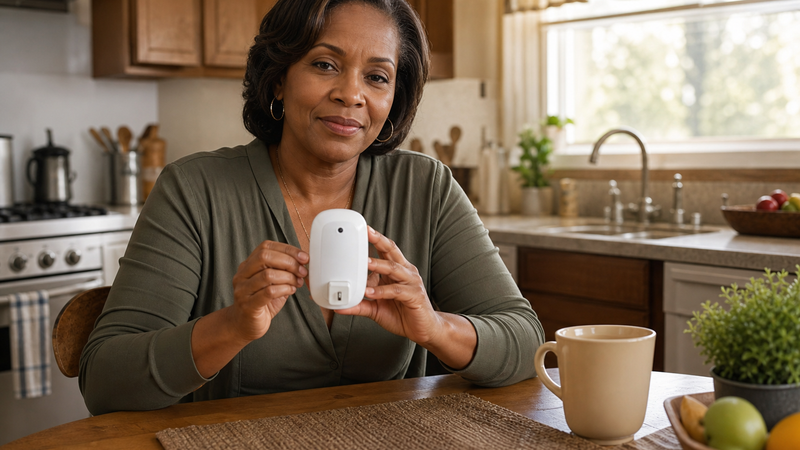
The best disguised cameras for catching nursing home abuse are everyday household objects — clocks, power outlet covers, air fresheners, picture frames — with a lens hidden inside that records continuously or on motion. These devices blend into any room without drawing attention, and they give families the clear, timestamped footage that documents what staff say never happens. A power outlet hidden camera or a clock-style unit are consistently the most effective because they belong naturally in any room and require no explanation.
I want to be honest with you before anything else. If you are searching for this, something has already gone wrong — or you feel in your bones that it might. Maybe your mother flinched when the aide came in the room. Maybe your father had a bruise nobody could explain. Maybe you called at a different time than usual and heard something in his voice that broke your heart a little. You are not being paranoid. You are being a good child. And you deserve real information, not vague reassurance. So let me walk you through this carefully, the way I wish someone had walked me through it.
Why do families use hidden cameras in nursing home rooms?
Nursing home abuse is one of the most underreported crimes in this country. It happens quietly, behind closed doors, to people who may not be able to tell you what happened — because they are afraid, because they have memory issues, because they don’t have the words anymore, or because the people hurting them have told them nobody will believe them anyway. The National Center on Elder Abuse estimates that for every case of abuse that gets reported, as many as five go undocumented.
Families don’t install hidden cameras because they want to spy on good caregivers. They do it because they are responsible for someone who cannot fully protect themselves, and they need to know the truth. A camera in the room is not an act of suspicion. It is an act of love. It is saying, in the clearest possible way: someone is watching out for you.
Many families also report that simply knowing a camera is present — even when they don’t announce it — changes the way staff behave. Whether that is a visible deterrent or a discreet recording device, the effect on accountability is real. If you want to understand the difference between visible and hidden options, I wrote about that in more depth in my post on fake vs. real security cameras for home use, which covers the decision-making process well.
What types of disguised cameras work best in a nursing home room?
The word “disguised” is doing important work here. What you need is a camera that does not look like a camera — something that belongs in the room without raising questions. There are several form factors that have proven reliable for this purpose, and each has strengths depending on the room setup and your specific situation.
Power outlet hidden cameras are among the most effective options available. They look exactly like a standard wall outlet — because they are one, functional in every visible way — but they contain a wide-angle lens and internal storage. They plug in or mount to the wall, draw no attention, and record continuously or on motion. Because they are always plugged in, there is no battery to die at the wrong moment. A hidden camera power outlet is one of the most reliable setups for long-term room monitoring precisely because it never needs fussing with.
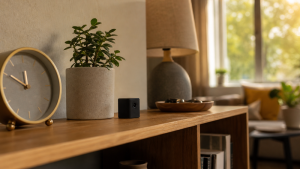
Clock cameras are another go-to. A bedside alarm clock is one of the most natural objects in any room — nobody questions it, nobody moves it, and it sits at exactly the right height to capture interactions between a resident and their caregiver. Many clock-style units offer motion-triggered recording, night vision, and loop recording so the card does not fill up and stop recording when you need it most.
Air freshener cameras and picture frame cameras also have their place. They blend into a room without requiring any explanation, and a framed family photo on the dresser — one with a lens inside — carries an emotional truth that feels right. You are watching over your family. Literally.
What all of these share: they are passive, unobtrusive, and designed to capture natural behavior. Nobody performs differently for a plug on the wall or a clock on the nightstand. That is exactly the point.
What features should you look for in a nursing home hidden camera?
Not all hidden cameras are built the same, and when the stakes are this high, you cannot afford a device that fails when you need it. Here is what matters most:
Motion-triggered recording with continuous loop. You want the camera to start recording when someone enters the room and keep recording until they leave — without you having to manage it remotely. Loop recording means when the storage card fills up, the oldest footage gets overwritten, so the camera never just stops. You want the most recent footage, and loop recording ensures it is always there.
Night vision. Abuse does not only happen during visiting hours. Nighttime care — turning a patient, changing them, administering medication — is often the time of greatest vulnerability. A camera without night vision is a camera with a nine-hour blind spot.
Wide-angle lens. A nursing home room is not large, but you want to capture the full space, not just a narrow slice of it. Look for a lens with at least 90 degrees of field, and ideally 120 degrees or wider.
Internal or expandable storage. Wi-Fi connected cameras that send footage to the cloud are useful in some settings, but in a nursing home, the Wi-Fi network may be unreliable or restricted. A camera that records to a local SD card — and does so reliably — is often a more dependable choice. You retrieve the card, you have the footage. Simple.
Power source. Battery-powered cameras give you placement flexibility, but they require regular maintenance. A camera that runs on AC power — like a power outlet hidden camera — never runs out. In a long-term monitoring situation, that reliability matters more than you might think.
Is it legal to put a hidden camera in a nursing home room?
This is the question I hear most often, and I want to be straightforward with you: the laws vary by state, and I cannot give you legal advice. What I can tell you is that many states have passed what are often called “Granny Cam” laws specifically to address this situation — laws that allow families to install monitoring cameras in nursing home rooms under certain conditions, such as notifying the facility and ensuring the roommate’s privacy if the room is shared.
Before you install anything, do two things. First, look up your state’s current law on nursing home monitoring. Several states — Texas, Oklahoma, New Mexico, Illinois, and others — have specific statutes. Second, talk to the facility administration in writing. Not to ask permission necessarily, but to create a paper record. How they respond to that conversation is itself information worth having.
If the room is private, the legal path is generally clearer. If it is a shared room, protecting the privacy of the other resident is both a legal and moral obligation, and that may affect where and how you place the camera.
How do you set up a disguised camera without alerting staff?
Steady and quiet. That is the approach that works.
Bring the camera in during a regular visit, inside a bag or box that looks like you are bringing personal items — which you are. A clock on the nightstand, a framed photo on the dresser, a plug-in air freshener on the outlet near the door. These are things families bring to make a room feel like home. Nobody looks twice.
Set the camera up before you leave. Make sure it is aimed at the area where most care interactions happen — beside the bed, near the chair where your loved one spends time during the day. Test the angle before you go. If you can check the live feed or view a test recording on your phone before you walk out the door, do it. You want to know it is working while you are still there to adjust it.
Change or retrieve the storage card on your regular visit schedule. Establish a routine that does not stand out. You come on Tuesdays. You bring clean clothes and a magazine. You also check the card. That is just Tuesday.
Keep the footage. Do not delete anything. Even footage that seems uneventful documents the baseline of normal care — and that baseline matters if you ever need to show what changed.
What do you do if your camera captures evidence of abuse?
First: do not confront the staff member yourself. I know every instinct you have says otherwise. But your safety matters, your loved one’s immediate safety matters, and evidence preservation matters. All three of those things are best served by staying calm and acting systematically.
Copy the footage immediately to a separate device. Do not rely on a single card or a single copy. Email the file to yourself. Put it on a thumb drive. Store it somewhere that cannot be tampered with.
Contact Adult Protective Services in your state. Every state has an APS agency, and nursing home abuse falls squarely within their mandate. You can also contact your state’s Long-Term Care Ombudsman — their entire job is to investigate and advocate in exactly this situation.
If the abuse is severe or you believe your loved one is in immediate danger, call 911. And then call a lawyer who handles elder law or personal injury. The footage you have is evidence, and you need someone who knows how to use it properly.
Remove your loved one from the facility as quickly as the situation allows. This is the hardest part — finding alternative care fast, under pressure, while you are also managing everything else. But if the environment is unsafe, staying is not an option.
Frequently Asked Questions About Disguised Cameras for Nursing Home Abuse
What is the most inconspicuous hidden camera for a nursing home room?
Power outlet cameras and clock cameras are the most inconspicuous options for nursing home rooms. Both belong naturally in the space without explanation. A hidden camera built into a wall outlet is especially unobtrusive because it looks like standard room hardware — no one questions a wall outlet. Clock cameras sit at ideal height for capturing caregiver interactions at the bedside.
Can nursing home staff legally remove a hidden camera from a resident’s room?
In most states where Granny Cam laws exist, staff cannot remove a legally installed monitoring camera without the resident’s or authorized family member’s consent. However, the rules vary by state and by whether the facility was notified. Document everything in writing before installation and keep a copy of your notification to the facility so you have a record if a camera is removed or tampered with.
How long does a hidden camera record before the storage fills up?
Recording time depends on the size of the SD card and whether the camera uses continuous or motion-triggered recording. A 32GB card with motion-triggered recording can typically capture several days of footage. Loop recording — where the oldest files are overwritten as the card fills — ensures the camera never stops recording. For long-term monitoring, loop recording and a large-capacity card are both essential features to look for.
Do I need Wi-Fi for a hidden camera in a nursing home?
No. Many of the most reliable hidden cameras for this purpose record locally to an SD card and do not require Wi-Fi at all. This is often an advantage in nursing home settings where the facility’s network may be restricted or unreliable. Local recording means the footage stays on the card and cannot be accessed or deleted remotely. You retrieve the card on your visit and review the footage yourself.
What should I do before installing a hidden camera in a nursing home?
Research your state’s law on nursing home monitoring cameras — many states have specific statutes. Notify the facility in writing and keep a copy. If the room is shared, address the roommate’s privacy, both legally and practically. Test the camera before your first visit so you know it is recording properly. And establish a regular schedule for checking and copying the footage.
Will a nursing home kick my loved one out if I install a camera?
In states with Granny Cam laws, retaliation against a resident for installing a monitoring camera is explicitly prohibited. Even in states without specific statutes, retaliating against a vulnerable resident for a family member’s actions would expose the facility to serious legal liability. That said, document the installation in writing so there is a clear record of what you did and when, and consult with an elder law attorney if you have concerns about the facility’s response.
What is the difference between a dummy camera and a real hidden camera for this situation?
A dummy camera — one that looks like a camera but does not record — can serve as a visible deterrent in some settings, but it provides no actual documentation. For catching nursing home abuse, you need a real recording device. The whole point is to capture footage that documents what is happening. A fake hidden camera deterrent has its uses in other contexts, but in a nursing home room where evidence could protect your loved one, only a real camera will do.
How do I review footage from a hidden nursing home camera without making it obvious?
Build the footage review into your regular visit routine. Bring a bag with personal items for your loved one, and among those items is the SD card you are swapping out. Review footage at home on a laptop or tablet — not on your phone in the parking lot where you might miss something important. Keep a dated log of what you reviewed and any timestamps worth noting. Quiet and consistent is the approach that works over time.
If you are going through this, you already know there is no easy version of it. You are doing something hard because you love someone who deserves better than what they may be getting. That is not paranoia. That is faithfulness. Get the camera. Learn the law in your state. And keep showing up — because your presence, your attention, and your willingness to document what is happening are the most powerful protections your loved one has right now.
Browse the hidden camera options at Tracey’s Safety and take your time choosing the one that fits your situation. And if you are thinking about the broader picture of protecting the people you love at home, my post on the best non-lethal weapons for home protection is a good place to keep reading. You are not in this alone.