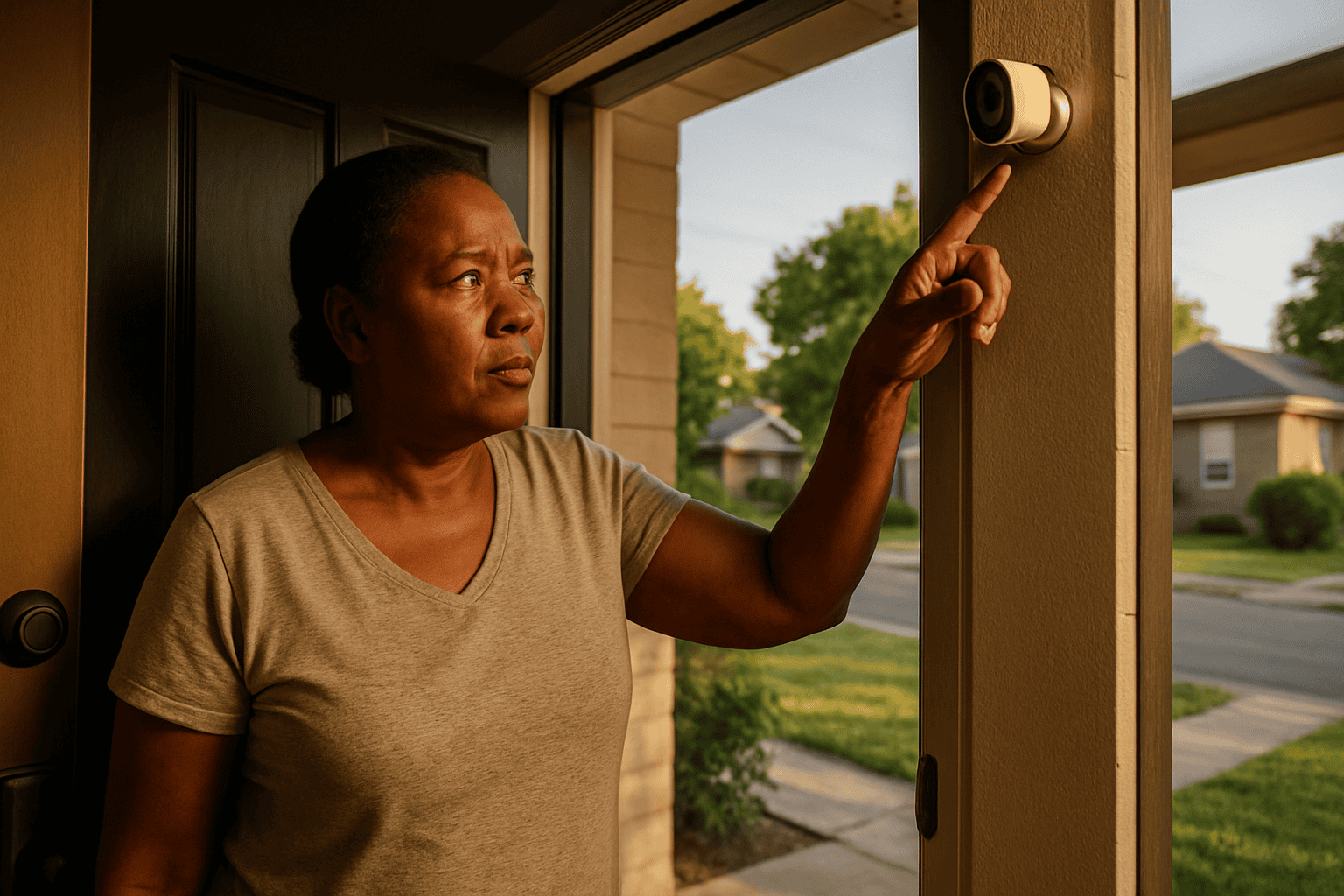
A real security camera records footage, stores evidence, and can alert you or law enforcement in real time. A dummy camera costs almost nothing, has no capability to capture evidence, and relies entirely on visual deterrence to work. For most homes, the right answer is not one or the other — it is knowing exactly where each belongs, and never making the mistake of relying on a fake camera in a location where a real one is actually needed.
Let me tell you something I learned the hard way — not from my own home, thank God, but from watching a neighbor go through something no one should have to. She had cameras on the front of her house. Nice-looking cameras, too. Big, black, mounted up high where anyone walking by could see them. Problem was, when someone broke in through her back gate, there was nothing. No footage. No timestamp. No evidence to hand the police. Just a violated home and a woman who thought she was protected because she could see cameras every time she pulled into her driveway.
Those were dummy cameras. She didn’t know the difference when she bought them, and nobody told her it mattered where you put them. That’s what I’m going to tell you today. Because there is a right way to think about fake versus real security cameras — and getting it wrong is not just a waste of money. It is a gap in your protection that someone else may find before you do.
What is the actual difference between a dummy camera and a real security camera?
A dummy camera — sometimes called a fake camera or decoy camera — is a physical housing designed to look like a real surveillance camera. That is all it is. It has no lens that records, no storage, no Wi-Fi connection, no motion sensor feeding data anywhere. Some have a small LED light that blinks to sell the illusion. Some swivel on a mount so they appear to track movement. But when something happens in front of one, there is no record of it. Nothing.
A real security camera records video — continuously, on motion trigger, or both. That footage goes somewhere: a local memory card, a DVR, cloud storage, or all three. When something happens, you have evidence. You have a face, a timestamp, a sequence of events that police can actually use. Some systems send alerts to your phone the moment motion is detected, so you are not finding out after the fact.
The difference matters more than most people realize. A dummy camera may deter a casual opportunist who notices it and decides your neighbor’s house looks easier. But it does nothing for someone who has already scoped your property, already noticed the camera has been in the same position for two years without moving, already seen the tell-tale blink pattern that never changes. Experienced burglars know what dummy cameras look like. They are not fooled. They are counting on the fact that you think they are.
That is the core calculation you need to make before you put anything on your walls.
Where does a dummy camera actually work as a deterrent?
I want to be clear: I am not here to dismiss dummy cameras entirely. Used correctly, they are a legitimate piece of a layered home security setup. The key word is correctly.
Dummy cameras work best in high-visibility, low-risk locations where visual deterrence is the goal — not evidence collection. Think about the front of a retail business where foot traffic is constant and the camera is meant to make shoplifters think twice before palming something off a shelf. Think about a parking lot entrance where the volume of vehicles makes full real-camera coverage cost-prohibitive. In those contexts, the visual signal matters, and the cost savings of a decoy are real.
For home use, a dummy camera with a blinking light can make sense as a supplement. Put one at the far corner of your property line — a spot that is far enough from your doors and windows that you would not have a real camera there anyway. Put one in a location that is meant to suggest broader coverage than you actually have. Use them to fill in the visual perimeter without running power and storage to every corner of your yard.
But understand what you are doing. You are creating an impression. You are not creating a record. The moment you put a dummy camera in a location where you actually need footage — your back door, your garage, a ground-floor window — you have traded security for decoration.
Which entry points in your home absolutely require a real security camera?
This is where I need you to pay close attention, because this is where most people get it wrong. The entry points that require a real camera are the ones that see the most criminal activity — and those are almost never the front door.
Statistics from law enforcement and home security researchers consistently show that a significant majority of break-ins happen through back doors, side doors, and garage entries. Burglars are not walking up your front steps in broad daylight. They are going around back, where your neighbor cannot see them, where the street is not watching. That is where your real camera needs to be.
Here is how to think about it, location by location:
Back door and side entries: Real camera, always. This is not negotiable. If something happens here, you need footage. Motion-triggered alerts are ideal so you know the moment someone is in that space.
Garage: Real camera if your garage connects to your home interior. Garages are one of the most common entry points for burglaries precisely because homeowners treat them as storage space and not as a door into their house. A real camera here, pointed at the garage door and any side entries, is essential.
Ground-floor windows: If you have a window in a low-traffic area — a side yard, a back alley — real camera coverage there is worth it. A dummy camera in a place where someone could break in and be completely unrecorded is worse than no camera at all, because it gives you false confidence.
Front door and main driveway: This is where a dummy camera can supplement. Combine a real doorbell camera or entry camera with a dummy unit at the edge of your driveway for broader visual deterrence. The front of your home is the most observed location — your neighbors see it, the street sees it. The real camera captures your entry; the dummy extends the illusion of total coverage.
How do you tell a dummy camera from a real one if you are buying used or inheriting a setup?
This is a question I get from people who just moved into a new home and found cameras already mounted. Do not assume they are real. Here is how to check.
First, look for a cable. Most real security cameras — especially older systems — have a power cable and a data cable running to a DVR or recording unit somewhere in the house. If you trace the mount and find no wire, or a wire that disappears into the wall and does not connect to anything, that is a red flag. Second, check for a DVR or NVR box. Real camera systems have a recording unit somewhere — a closet, a shelf, a utility room. If no such unit exists, the cameras may be decorative. Third, look up the model number if it is visible. A quick search will tell you immediately whether that housing has ever contained a real camera.
Do not let a previous owner’s setup make your security decisions for you. Verify what you have. If you cannot verify it, treat it as a dummy until proven otherwise — and cover your critical entry points accordingly.
How do dummy cameras and real cameras work together in a complete home security plan?
The best home security setups are layered. No single product does everything, and that is by design. A camera — real or fake — is one layer. Your locks are another layer. A diversion safe hidden in plain sight inside your home is another layer, protecting your valuables even if someone does get in. Your awareness of who is on your block is a layer. What you keep near your bed at night is a layer.
Within the camera layer specifically, a smart combination looks like this: real cameras on all critical entry points with footage stored off-site or in the cloud so it cannot be grabbed or destroyed, dummy cameras filling in the visual perimeter at lower-risk locations, and consistent maintenance so the whole system looks live and active. A camera with a cobweb on it, or a light that stopped blinking because the battery died six months ago, is not deterring anyone.
If you are building or upgrading your setup right now, start at the back of your house and work your way forward. Put your real cameras where the risk is highest first. Fill in the visual perimeter with quality dummy cameras for home once your critical points are covered. Never work in reverse.
What are the signs that your current camera setup has dangerous gaps?
Walk your property the way someone who means you harm would walk it. I mean that literally. Go outside, stand at your back gate or alley entrance, and look at your house. Can you see a camera from there? Is it clearly operational — cable visible, light blinking, housing clean and maintained? Or does it look like it has been there untouched since the Obama administration?
Watch for these warning signs that your setup has gaps you need to address:
Your back door, garage, or any ground-floor entry point is covered only by a dummy camera. Any camera on your property has a dead or missing LED indicator and you are not sure if it is real. Your recording system — if you have one — has not been checked in more than six months and you do not know if it is actually storing footage. You have no motion alerts set up, meaning you would only know about an intrusion after the fact. Your cameras cover your front door beautifully but leave the sides and rear of your property completely blind.
Any one of these is worth fixing this week. Not next month. This week.
Frequently Asked Questions About Fake vs. Real Security Cameras for Home
Can a smart burglar tell the difference between a fake security camera and a real one?
Yes, often. Experienced burglars know common signs of dummy cameras: fixed, unchanging LED blink patterns, housing with no visible cable, cheap plastic construction, and model numbers that return no real product results. A motivated, experienced intruder will not be deterred by a convincing-looking fake. Dummy cameras are most effective against casual, opportunistic theft — not against someone who has already chosen your home as a target.
Are dummy cameras legal to use on your own property?
In general, yes — placing a dummy camera on your own property is legal in most jurisdictions. However, some states have restrictions on using dummy cameras in ways that could be considered deceptive to law enforcement or in certain commercial applications. For home use on your own property, dummy cameras are widely used and generally unregulated. Always check your local ordinances if you have specific concerns.
Do dummy cameras actually deter crime?
Research on visible security cameras — real and fake — does show a general deterrent effect on opportunistic crime. A visible camera presence can cause a casual would-be burglar to move on. The problem is that deterrence is not the same as protection. If deterrence fails and an incident occurs, a dummy camera provides nothing. This is why dummy cameras should supplement real ones, never replace them at critical entry points.
What is the minimum number of real cameras a home should have?
Most home security professionals recommend at minimum one real camera at each primary entry point: front door, back door, and garage. For homes with a side gate, alley access, or ground-floor windows in low-visibility areas, additional coverage is warranted. Think of it this way — every door through which a person could enter your home unobserved needs a real camera with recording capability, not just a visual deterrent.
What should I look for when buying a real security camera for home use?
Look for motion-triggered recording with real-time alerts to your phone, night vision capability for low-light conditions, cloud or off-site storage so footage cannot be destroyed by someone who grabs your DVR, and weather-resistant housing for outdoor placement. Resolution matters — 1080p is a reasonable baseline for identifying faces and license plates. Wired systems tend to be more reliable than battery-powered ones for permanent outdoor installation.
Can I use a dummy camera inside my home?
Inside your home, a real camera serves you far better. Interior cameras provide evidence of what happened, where, and by whom — information that is critical for insurance claims and law enforcement. A dummy camera inside your home offers no practical benefit to you once someone is already inside. Save dummy cameras for exterior deterrence; invest in real recording capability for your interior.
How often should I check my real security cameras to make sure they are working?
Check your system at minimum once a month. Verify that footage is actually recording and being stored, that motion alerts are functioning, that camera lenses are clean and unobstructed, and that any physical mounts are secure. Many homeowners discover their recording system stopped working weeks or months before they check — meaning an incident that occurred in that window left no evidence. Monthly maintenance is not excessive. It is the floor.
What else should I have at home beyond cameras for real security?
Cameras — real or fake — are one layer of protection. Strong door locks, motion-activated lighting, a visible security sign, and tools for personal defense inside the home all matter. Knowing your neighbors and keeping an eye on each other’s properties matters. If someone does get through your door, having pepper spray for home defense accessible gives you an active option that no camera — real or fake — can provide.
Here is what I want you to take away from all of this. A dummy camera is a tool. Like any tool, it does its job when you use it right and it fails you when you use it wrong. The mistake is not using dummy cameras — the mistake is using them where you needed the real thing, and not finding out until something happens that you wish you had footage of.
Start with your back door. Start with your garage. Start with the entry points that nobody on the street can see. Put your real cameras there first, and build your setup outward from the places that need evidence most. Fill in your perimeter with decoys once your critical points are covered. Check your system every month like it matters — because it does.
You do not have to spend a fortune. You have to spend smart. Know what you have, know what it does, and know where the gaps are before someone else finds them for you. That is the whole thing, right there.