
Rechargeable keychain stun guns last longer in the long run — most hold a charge for 1 to 4 months on standby and can be recharged hundreds of times, while replaceable-battery models drain faster in cold weather and often sit dead in a drawer because nobody thinks to check them. But there’s a catch neither battery type advertises, and it’s the reason so many stun guns fail at the exact moment someone needs them.
Here’s something the packaging won’t tell you. Every keychain stun gun on the shelf — rechargeable or not — has a hidden weak point that has nothing to do with milliamps or voltage. It’s not in the spec sheet. It’s not on the box. And most people who carry one for self-defense never find out about it until the one night it matters.
I’m going to tell you what it is. But first, let’s talk about the battery question everybody asks me, because the answer isn’t as simple as “rechargeable is better.” There’s a truth buried in there that changes how you should be storing, charging, and carrying whatever’s on your keyring right now.
Do rechargeable stun guns really last longer than replaceable battery ones?
Yes — but not for the reason most people assume. It’s not that the rechargeable battery itself is stronger. It’s that rechargeable models keep their charge sitting in the unit long after you’ve stopped thinking about it, sometimes for weeks, sometimes for months. Replaceable battery models depend on you remembering to check them, and that’s where things quietly go wrong.
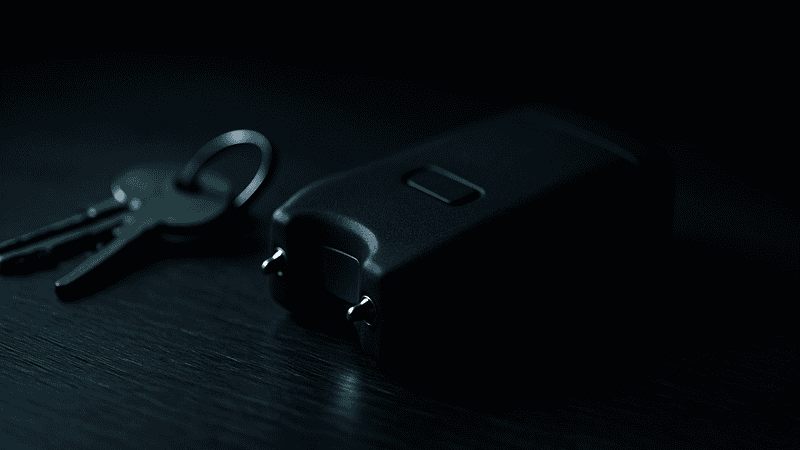
A rechargeable stun gun, like the kind built into a lightweight stun gun designed to ride on a keychain all day, typically holds enough of a charge to sit unused for one to four months before it needs topping off. That’s a wide range, and the reason it’s wide is the part nobody talks about — temperature, humidity, and how the internal cell was manufactured all shift that number more than the brand name does.
Replaceable battery units, usually running on standard alkaline or lithium cells, work fine right out of the package. The problem shows up later. Cold weather pulls voltage out of alkaline batteries fast — sometimes 20 to 30 percent of their working capacity disappears once temperatures drop below 40 degrees. A unit that fired strong in July can sputter in January, and the person carrying it has no idea until they press the trigger and get less than they expected.
What’s the hidden factor that determines whether a stun gun works when you need it?
It isn’t the battery type at all. It’s the gap between the last time you tested it and the moment you actually need it. This is the part almost nobody asks about, and it’s the real answer behind every battery question you’ve ever had about a self-defense device.
A stun gun sitting untouched in a bag for six months behaves differently than one tested even once a month. Rechargeable units lose a small percentage of charge just sitting idle — it’s called self-discharge, and it happens to every rechargeable battery on earth, from your phone to your car key fob. Replaceable battery units don’t self-discharge the same way, but they corrode. Battery contacts oxidize. Springs lose tension. A unit that’s been sitting for a year and a half can fail not because the battery died, but because the metal touching the battery stopped making a clean connection.
This is why the real answer to “which lasts longer” has less to do with rechargeable versus replaceable, and everything to do with habits. The stun gun that lasts is the one somebody checks.
How often should I charge or replace the battery in my keychain stun gun?
Rechargeable units should be topped off once every 30 to 60 days, whether or not the indicator light says you need to. Replaceable battery units should have their batteries swapped every 6 to 12 months, even if the device still tests fine — because the corrosion I mentioned starts long before the device stops working.
Set a reminder. I mean an actual reminder on your phone, not a mental note, because mental notes are exactly how batteries die quietly in the bottom of a purse. Pick a date that means something to you — the first of the month, a birthday, the day the clocks change — and test your device then. Press the button. Listen for the crackle. If it’s rechargeable, plug it in for a few hours regardless of what the light shows.
Parents who set up a self-defense keychain for teens heading off to school or college should build this into the same routine as checking a phone charger or a car’s oil light. It becomes automatic fast.
Why do some stun guns feel weaker even when the battery shows full?
This is the mystery that trips up more people than any other part of stun gun ownership. A battery indicator light showing “full” measures voltage, not output strength — and those aren’t the same thing at all.
A battery can hold a full charge and still deliver a weaker arc because internal components — the transformer, the circuit board, the contact points — degrade with age and use, independent of the battery itself. This is more common in units that have been dropped, exposed to moisture, or carried loosely in a bag where the internal wiring takes a beating over months of friction and jostling.
It’s part of why so many people who take their safety seriously eventually move toward something built to police-grade internal standards, like a police stun gun for civilian use — the internal components are engineered to hold their output consistently over years, not just months.
Does the way I carry my stun gun affect its battery life?
Yes, more than most people realize. Heat, moisture, and constant jostling all quietly shorten battery life, whether rechargeable or replaceable — and where you carry your stun gun determines how much of each it’s exposed to.
A stun gun clipped to a keyring that lives in a coat pocket faces temperature swings every time you walk from a warm building into cold air and back again. That constant expansion and contraction stresses both the battery and the internal seals. A stun gun that stays in a car — glove box, console, door pocket — takes the worst of it. Summer dashboard temperatures in a parked car can exceed 140 degrees, which is brutal on any battery chemistry.
A unit designed with a stun gun with a safety pin attached directly to your keys, carried on your person rather than left in a vehicle, avoids most of that punishment. Students carrying a stun gun for college campus use should keep it on their actual keyring, not tucked away in a backpack pocket that sits in a locker all day heating up or cooling down with the building.
What’s the real difference in long-term cost between rechargeable and replaceable models?
Rechargeable models cost more upfront but less over time, since you’re not buying batteries every few months. Replaceable models cost less at the register but add up in small purchases you barely notice — until you realize you’ve bought a dozen batteries over two years for a device that cost twenty dollars to begin with.
There’s a quieter cost too, one that doesn’t show up on a receipt. Replaceable battery units invite procrastination. It’s easy to tell yourself you’ll grab batteries next time you’re at the store, and then forget, and then the device sits half-dead for a month. Rechargeable units remove that excuse — you plug it in at the same outlet where you charge your phone, and it’s done.
Frequently Asked Questions About Keychain Stun Gun Battery Life
How long does a rechargeable keychain stun gun hold its charge?
Most rechargeable keychain stun guns hold a usable charge for one to four months in standby, depending on temperature and how the unit was manufactured. Cold storage and humidity both shorten that window. Testing it monthly and topping off the charge regardless of the indicator light is the safest habit.
Can I leave a stun gun plugged in overnight to charge?
Most keychain stun guns are designed with charge-limiting circuits that prevent overcharging, but leaving any device plugged in far longer than needed still adds unnecessary wear over years of repeated cycles. A few hours is typically enough — check your specific unit’s charge time rather than assuming overnight is required.
Do replaceable batteries work better in cold weather than rechargeable ones?
Neither performs particularly well in extreme cold, but they fail differently. Alkaline replaceable batteries lose voltage output as temperatures drop, sometimes significantly. Rechargeable lithium-based cells handle moderate cold better but can slow their discharge rate in very low temperatures. Neither should be left in a freezing car overnight if you expect full performance.
How do I know if my stun gun’s battery is dying?
A weaker or shorter arc, a dimmer indicator light, or a delay before the device activates are all early signs. Don’t wait for total failure to notice — test monthly by pressing the trigger briefly and listening and looking for a strong, consistent crackle rather than a faint one.
Is it safe to store a stun gun with the battery still inside long-term?
For replaceable battery units, no — batteries left in unused devices for over a year risk corrosion that can damage internal contacts. Remove batteries if you know a device will sit unused for several months. Rechargeable units are generally safer to store as-is, but still benefit from a charge cycle every couple of months.
Why does my stun gun feel weaker even though I just charged it?
A full charge measures voltage, not the health of the internal components that convert that voltage into output. Age, moisture exposure, or physical impact can weaken a unit’s performance independent of the battery. If a fully charged device still feels weak, the internal circuitry — not the battery — is likely the issue.
Which lasts longer overall, rechargeable or replaceable battery stun guns?
Rechargeable models generally last longer in practical terms because they’re easier to maintain consistently and don’t rely on remembering to buy batteries. But the real determining factor for either type is how often the device is tested and maintained — a neglected rechargeable will fail just as fast as a neglected replaceable one.
Should I test my stun gun even if I never plan to use it?
Yes. Testing monthly is the single biggest factor in whether a stun gun works when it’s actually needed. A device that’s never tested can develop weak contacts, corrosion, or a diminished charge without any outward sign until the moment it fails.
There’s a version of this story that plays out the same way every time. Someone buys a keychain stun gun, clips it on, feels good about it, and never touches it again until the night they need it most. What separates the people who are protected from the people who aren’t isn’t the brand on the device or whether it takes a battery or a charger. It’s whether anyone ever checked.
Make it a habit. Test it, charge it, swap the battery before it asks you to. That’s the quiet difference between a stun gun that works and one that just sits there looking like protection. If you’re building out a full safety plan at home, it’s worth reading about personal protection tools that hold up in rough environments for more on what actually survives daily wear and tear.