Female runners running alone should carry at least one reliable, easy-access self-defense tool built for movement — a personal alarm, a small pepper spray, or a compact keychain device made to clip onto a hand, wrist, or waistband. The right tool is the one you’ll actually carry every single time, not just the one that sounds the toughest. Reliability, accessibility, and practice matter more than power alone.
I’ve talked to enough runners over the years to know the truth nobody likes to say out loud: most women who run alone have thought about what they’d do if someone came after them. Not obsessively. Not in a panicked way. Just a passing thought, somewhere around mile two, when the trail gets quiet and the trees get thick. That thought is not paranoia. That’s instinct doing its job.
What I want you to walk away from this post with isn’t fear — it’s a plan. A short list of tools that runners like you have actually tested, actually trusted, and actually carried mile after mile without it slowing them down. Let’s get into it.
Why do female runners need self-defense tools specifically for running?
Because a tool that works great in your purse or on your nightstand often fails you completely on a run. You need something that survives sweat, movement, and split-second decisions — not something buried at the bottom of a bag you’re not carrying anyway.
Runners move differently than someone walking to their car. Your hands are often occupied or swinging. Your breathing is elevated. Your reaction time under stress is already taxed by exertion. A tool built for runners has to account for all of that — quick-draw access, a secure grip even with sweaty palms, and a design light enough that you forget it’s there until you need it.
This is why I always point runners toward gear made specifically with movement in mind, not general-purpose self-defense products. It’s a small distinction that makes a very real difference at 6 a.m. on an empty greenway.
What is the best self-defense tool for runners to carry?
For most runners, a combination of a personal alarm and a small pepper spray offers the most reliable protection. The alarm draws attention and disrupts an attacker’s plan before anything physical happens. The pepper spray gives you a fallback if someone closes the distance anyway.
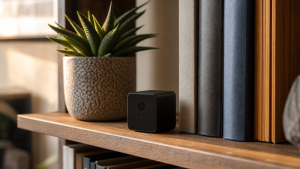
I trust personal alarms built for runners because they solve the biggest problem in a startling moment — hesitation. You don’t have to aim it. You don’t have to think clearly under adrenaline. You pull the pin, and it screams louder than you ever could, loud enough to turn heads from a block away. That noise does two things at once: it scares off someone counting on you staying quiet, and it tells everyone nearby that you need help right now.
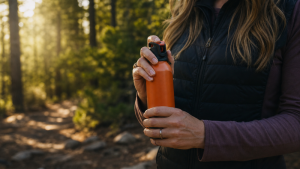
Pepper spray earns its place for the moments when noise alone isn’t enough. A compact canister from a brand like Mace or Wildfire fits in a runner’s hand almost like an extension of your fist, and a quick burst can give you the seconds you need to get away and get to safety. I’ve recommended these to my own daughter for her early morning runs, and she’s never once complained about the weight — because there isn’t any to speak of.
How should runners carry self-defense tools without breaking their stride?
The answer is simple: wear it, don’t stash it. Anything zipped in a pocket or buried in an armband defeats the purpose. Runners should carry tools that attach directly to the body — wrist, waistband, or shoelace — so there’s no fumbling when seconds count.
A lot of runners I know clip a small device to their running shorts or shoelace loop and forget it’s even there until the second they need it. This is where self-defense keychains earn their keep — they’re built small and light enough to hook onto a running belt or wrist strap without adding bulk or bounce.
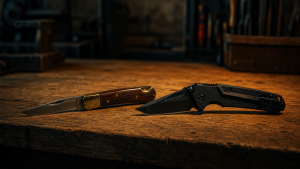
Some runners also like a slim option they can palm comfortably, similar to what you’d find in our lineup of compact self-defense knives, though I always tell folks: know your comfort level and your local laws before adding a blade to your routine. For most runners, a well-placed alarm or spray solves the problem without that added responsibility.
What time of day is riskiest for runners, and does gear choice change?
Early morning and after-dusk runs carry the highest risk, mainly because visibility is low and streets are empty — for you and for anyone who might be watching. During these hours, tools that combine light and sound, like a personal alarm with a built-in flashlight, do double duty: they help you see and be seen, and they startle anyone who assumes the dark gives them cover.
I always tell the women in my neighborhood — run the well-lit path, even if it adds five minutes. Predators look for opportunity, not effort. Removing the opportunity is half the battle before you even think about a defensive tool. We cover a lot of this same thinking in our piece on walking home safely after dark — the same principles apply whether you’re walking or running.
If your route can’t avoid low-light stretches, lean on tools built for visibility and noise together. It’s not about running scared. It’s about running smart.
Do self-defense tools actually work for someone who’s never used one before?
Yes — but only if you practice with it before you need it. A tool you’ve never touched outside its packaging is a tool you’ll fumble with under stress. The good news is that most runner-focused self-defense tools are built to be intuitive, requiring no training beyond a few minutes of familiarization.
I tell every woman who buys her first pepper spray from me the same thing: take it out of the box in your driveway. Practice pulling the safety. Practice the motion of aiming and pressing. Do it once in daylight, calm, with no adrenaline running through you — so your hands remember what to do when adrenaline is exactly what’s running through you.
The same goes for a telescopic baton, which some runners prefer for its reach advantage on quiet trails. It takes one practice flick to learn the motion. One practice flick is all it takes to turn hesitation into muscle memory.
What else should runners know before choosing their gear?
Trust builds over time, and it builds through consistency — carrying your tool on every single run, not just the ones that feel unsafe. The runs that feel routine are exactly the ones where something can go wrong, because that’s when you’re least on guard.
I always tell runners to think of their gear the way they think of their shoes: something you put on without thinking, every time, because you know what it does for you. A personal alarm clipped to your shorts becomes just as automatic as lacing up. That consistency is what makes these tools actually effective — not the tool itself, but the habit of carrying it.
And if you’re someone who also works irregular hours — a nurse coming off a night shift, a delivery driver finishing a late route — a lot of these same principles carry over. We talk through similar situations in our piece on tools that hold up for night shift workers, since the core need is the same: something reliable, something quick, something you trust without thinking twice.
Frequently Asked Questions About Self-Defense Tools for Runners
What is the best self-defense tool for a woman running alone?
A personal alarm paired with a compact pepper spray is generally the most trusted combination for runners. The alarm draws immediate attention without requiring aim, while the spray offers a physical deterrent if someone gets close. Both are lightweight, clip-on options that won’t interrupt your stride.
Is pepper spray legal to carry while running?
In most states, yes, pepper spray is legal for personal protection, though rules on canister size and formula strength vary by location. Always check your specific state and local regulations before purchasing, and choose a compact size made for easy carrying during exercise.
How loud does a personal alarm need to be to work?
Most trusted personal alarms for runners emit around 130 decibels — louder than a chainsaw and loud enough to be heard from a significant distance. That level of noise is designed to startle an attacker and draw attention from anyone nearby who might help.
Where should I carry self-defense gear while running?
Carry it on your body, not in a bag. Wrist straps, waistband clips, shoelace attachments, and running belts all keep your tool accessible within a second. Anything that requires unzipping a pocket or digging through a bag defeats the purpose in a real emergency.
Do I need training to use a self-defense tool while running?
Formal training isn’t required for most runner-friendly tools like alarms and pepper spray, but practicing the motion beforehand matters. Take your tool out in a calm moment, practice releasing the safety and aiming, so your hands know what to do without thinking under stress.
Can I carry a knife while running for self-defense?
Some runners choose a compact knife, but it requires more comfort, responsibility, and legal awareness than an alarm or spray. Check your local laws first, and only carry a blade if you’re confident in your ability to access and use it safely under pressure.
What should I do if I feel unsafe on my running route?
Trust that feeling immediately — change your route, turn back, or call someone to stay on the phone with you. Carry a tool that requires no delay to activate, like a personal alarm, and consider running routes with better lighting and more foot traffic during high-risk hours.
Are self-defense tools for runners different from ones for everyday carry?
Yes. Runner-focused tools are built lighter, smaller, and designed to attach directly to the body — wrist, waist, or shoe — so they stay accessible during movement without bouncing or slowing you down. Everyday carry tools often prioritize different features, like size for a purse or desk drawer.
Running alone is not something you should have to think twice about, but I’d be lying if I told you the world always makes that easy. What I know for certain, after years of talking with women on this exact topic, is that the ones who feel most confident on their routes are the ones who’ve made peace with carrying something small, trusted, and practiced. Not out of fear. Out of love for themselves and everyone waiting for them to come home.
Lace up, carry something that’s earned your trust, and keep running the routes you love. That’s the whole goal here — not to make you afraid of the road, but to make sure the road never gets the last word.