Quick Answer: The walk home at night is safer when you plan the route before you step outside, carry a defense tool you can reach in under two seconds, keep your phone down and your eyes up, and trust your gut the instant something feels off. Most incidents happen to women who look distracted, not to women who look aware. A personal alarm, pepper spray, or defense keychain buys you the seconds you need to get to your door — and planning your walk before you leave makes those tools three times more effective.
The Block I Grew Up On, and the Block I Live On Now
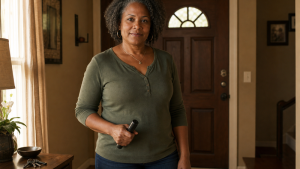
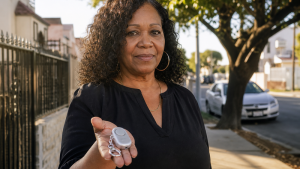
I have lived in this part of Los Angeles a long time. Long enough to remember when Mr. Alvarez sat on his porch every evening with the transistor radio tuned to the Dodgers game. Long enough to remember when all three streetlights on my corner worked. Long enough to remember when the walk from the bus stop to my front door felt like the end of the day, not the scariest part of it.
Some things change. Some things don’t. What hasn’t changed is that every woman on my block is having the same quiet conversation — with her sister, her daughter, her best friend, the lady at the nail salon. How did you get home last night? Did you park under the light? Did you have anything on you? We don’t talk about it loud. We just talk about it. All the time.
So let me sit down with you for a minute. Because what I want to tell you is what I have told my own daughter, my own nieces, and every woman who has ever walked into my shop or picked up the phone wondering where to start. This isn’t a post about being afraid. This is a post about loving yourself enough to come home.
What Do Predators Actually Look For in a Target?
They look for distraction. That’s the whole thing, right there.
A man who means harm isn’t hunting the strongest woman on the street. He’s hunting the one who doesn’t see him. The one with her head down over a phone. The one with headphones in both ears. The one digging through her purse at her car door. The one who walks past him without ever registering that he’s there.
Awareness is the first thing you put on before you leave the house, and the last thing you take off when you lock the door behind you. Here’s what that looks like in plain English:
- Phone down, head up. Whatever is on that screen can wait three more minutes. I promise.
- One earbud out. Both ears on the world around you from the moment you step off the bus or out of the car.
- Keys in your hand before you need them. Not in your purse. Not at the bottom of your bag. In your fingers, ready.
- Eyes on faces, not feet. Look at the people you pass. A predator relies on you not seeing him. Take that away from him.
You do not have to be rude. You do not have to glare. You just have to be seen seeing him. That alone walks most of them right past you.
Which Self-Defense Tools Should Every Woman Carry?
I am going to tell you what I hand to my own daughter when she leaves my house. Three things. Not five, not ten. Three.
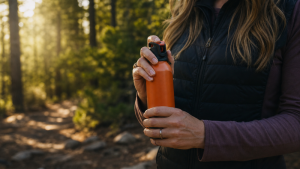
Pepper spray. The first tool, and the one I will never let a woman I love walk out the door without. It works at a distance, which means you don’t have to let him get close to you to use it. A keychain canister clips to your purse strap or your bag zipper where you can grab it without looking. Learn how to use it before you need it. Take the cap off at home, in the kitchen sink, just to feel how the safety slides. Your hands need to know the motion before your heart is pounding too hard to think.
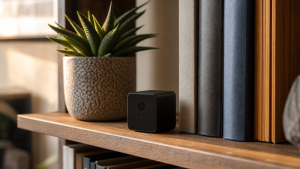
A personal alarm. One hundred thirty decibels. Louder than a motorcycle. Louder than a thunderclap. You pull the pin and the whole block hears you. That noise does two things at once — it draws every eye in a two-hundred-foot circle, and it tells the man standing too close to you that he has lost his anonymity. Predators need quiet. An alarm takes quiet away from them. I have one on my keys. My mother has one on her walker. The ladies at my church each have one in their purse.
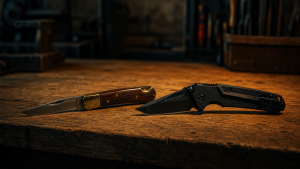
A defense keychain. Something solid in your fist when the space between you and your door gets too short for anything else. Not a weapon you go looking for trouble with. A tool that gives your hand something to hold onto when your hand needs it most.
These three together cost less than one dinner out. And they are the difference between being a target and being a woman a predator decides to leave alone.
How Do You Plan a Safe Walk Home at Night?
You plan it before you leave. That’s the secret. The walk home is not the moment to start thinking about the walk home.
Before you step out of the office, the grocery store, the restaurant, or the bus stop for ten seconds and map it. Which side of the street is lit? Which businesses are still open along your route? Which neighbor keeps their porch light on all night? Where is the gap between streetlights where you need to move a little quicker? Where is the blind corner you need to take a little wider?
If you can, walk the lit side. If you can, walk past the open businesses instead of the closed ones. If you can, keep your route past homes with lights on instead of homes that are dark. You are not being paranoid. You are being a grown woman who understands that where you walk matters as much as how you walk.
And one more thing, baby. Text somebody. Tell your sister, your daughter, your best friend, your husband — I’m leaving the bus stop now, I’ll be home in eight minutes. Then text when you get there. That simple habit has saved more women than I can count. Because the person on the other end of that text knows exactly when to start asking questions if the second text never comes.
What Should You Do When Your Gut Says Something Is Wrong?
You listen. That is the whole answer. You listen.
Women are taught from the time we are little girls to be polite. To not make a scene. To not hurt anybody’s feelings. To give people the benefit of the doubt. And most of the time, that is good manners and I will not argue with it.
But there is a voice inside you — older than your manners, older than your upbringing, older than every polite instinct you were raised with. It is the voice that kept your great-grandmother alive. And when that voice tells you something is wrong here, get out, you do not argue with it. You do not explain it. You do not apologize for it.
You cross the street. You walk into the open business. You call somebody. You pretend to get a phone call if that’s what it takes. You turn around and take the long way. You get your spray in your hand. You do whatever that voice tells you to do, and you do it immediately.
Every woman I know who has a story that ended badly has the same sentence in it somewhere: I knew something was wrong, but I didn’t want to seem rude. Every woman I know whose story ended well has a different sentence: Something told me to get out of there, and I listened.
Be the second kind of woman. Always. Your feelings are not more important than your life. And the man who makes you feel embarrassed for protecting yourself was never worth your embarrassment in the first place.
Coming Home Is the Whole Point
I want you to think for a minute about what is on the other side of your front door. Maybe it’s your children. Maybe it’s your husband. Maybe it’s your cat who won’t shut up until you feed her. Maybe it’s nobody at all, just the quiet of a life you built with your own two hands.
Whatever it is, that is what you are walking home to. That is what every tool in your purse is for. That is what every lit street and every planned route and every listened-to instinct is protecting.
You are not carrying pepper spray because the world is evil. You are carrying it because your life is good, and the people waiting for you are worth coming home to, and you know it.
Frequently Asked Questions
What is the safest self-defense tool for a woman walking home alone at night?
Pepper spray is the most recommended first tool because it works at a distance, requires no physical contact with an attacker, and gives you the critical seconds needed to escape. A keychain canister clips to a purse or bag where it can be reached without looking, and most formulas are effective from six to ten feet away. Many women carry pepper spray together with a personal alarm for a layered approach that handles different situations.
How loud does a personal alarm need to be to actually work?
A personal alarm should produce at least 120 decibels, with 130 decibels being the standard for most quality models. That volume is comparable to a thunderclap or an ambulance siren and is specifically loud enough to be heard from a considerable distance, startle an attacker, and draw immediate attention from bystanders. Anything quieter than 120 decibels will not carry far enough to be effective on a city street.
Is it legal to carry pepper spray in California?
Yes, pepper spray is legal to carry for self-defense in California for anyone eighteen or older who has no felony convictions and has not been convicted of assault or misuse of pepper spray. California law limits canister size to 2.5 ounces of spray content, which covers every keychain and purse-sized model available. Always check local city ordinances if you travel outside California, as laws vary by state and municipality.
What should I do if someone is following me on my walk home?
Change your direction immediately and head toward a lit, populated area such as an open business, gas station, or busy intersection. Pull out your phone and call someone — even a fake call works to signal that you are not alone and are connected to others. If the person continues following, activate your personal alarm to draw attention and make yourself a witnessed, unattractive target. Never walk directly to your home or car if you believe you are being followed.
How do I carry pepper spray so I can actually reach it in time?
Clip it to the outside of your purse strap, your belt loop, or the zipper pull of your bag, where your hand can find it without looking. Pepper spray buried at the bottom of a purse is essentially useless in an emergency because you will not have time to dig for it. Many women keep one canister on their keychain and a second clipped to their bag for redundancy.
Should women carry more than one self-defense tool at a time?
Yes, layered protection is strongly recommended because no single tool works in every situation. A typical setup includes pepper spray for distance, a personal alarm to draw attention, and a defense keychain for close-quarters use. Each tool handles a different type of threat, and carrying all three costs less than sixty dollars while dramatically expanding your options in an emergency.
What is the best personal safety habit for women who walk home alone?
Text a trusted person before you begin your walk with your route and expected arrival time, then text again when you are safely inside. This single habit creates accountability and ensures someone is immediately aware if something goes wrong. Combined with keeping your phone down during the walk itself, carrying a reachable defense tool, and planning your route before leaving, it forms the foundation of safe everyday travel.
Does looking confident really deter attackers?
Yes, posture and awareness are among the strongest deterrents documented in research on predator behavior. Attackers consistently select targets who appear distracted, hesitant, or unaware of their surroundings rather than women who walk with purpose, make brief eye contact, and project awareness of the environment. Walking with your head up, shoulders back, and phone away signals that you would not be an easy target and often causes a predator to move on entirely.
Walk Home Like You Mean It
Preparation is love. That’s the whole message I want to leave you with. Every tool you put in your purse is a small act of love for the woman you are and the life you are walking back to. Every planned route is love. Every listened-to instinct is love. Every text to your sister that says I’m walking now is love.
You deserve to get home. You deserve every second those tools buy you. And you deserve to stop feeling guilty for wanting to protect yourself.
So put the spray on your keys, baby. Keep your head up. Listen to that voice when it speaks. And walk home like you mean it.