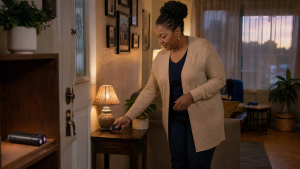
A woman living alone needs alarm coverage on every entry point a person could actually use — the front door, back door, sliding door, ground-floor windows, and even the garage or basement access. One alarm on the front door means every other opening is silent. The right setup layers door and window alarms with a loud personal alarm you carry room to room, so nothing in your home can be tested quietly.
Introduction
Somebody is going to test your door tonight. Not necessarily with bad intentions the first time — a hand on the knob, a push on the screen, a rattle to see if it gives. Most people never know it happened. That’s the problem. Silence is what a predator counts on. An alarm is what takes that silence away from him.
I want you to walk your own home with me for a minute — every door, every window, every place a person could get in without much effort. Then I want to show you exactly what covers each one, so by the time you’re done reading, you’re not wondering anymore. You’ll know.
Which entry points actually need an alarm?
Every door and every ground-floor window that opens to the outside needs its own alarm. That includes the front door, the back door, any sliding glass door, and every window low enough for a person to reach or climb through — garage windows and basement windows most of all, because those are the ones people forget.
I’ve walked through more than one house where the owner had a alarm on the front door and nothing else, like the back door and the bedroom window weren’t real ways in. They are. A person who wants in badly enough will find the quiet way, not the loud one. That’s exactly why every opening needs its own trigger — not a shared system that only covers the door you thought about.
Go room by room. Front door. Back door. Side door if you have one. Sliding door to the patio or balcony. Every window a grown adult could fit through. If it opens to the outside and it’s on the ground floor, it gets an alarm. No exceptions, no “that one’s probably fine.”
What type of door alarm works best for a woman living alone?
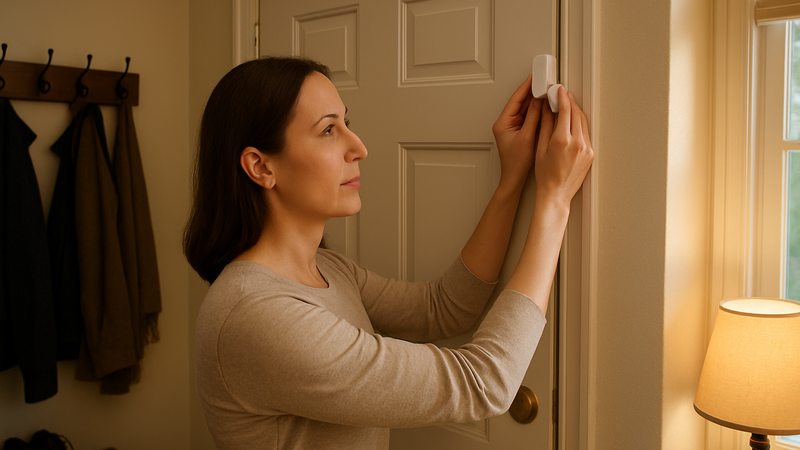
A magnetic contact alarm that sounds the second the door or window separates from its frame is the standard that works best for someone living alone, because it triggers on the opening itself — not on movement inside the room, which can mean false alarms from a cat, a fan, or a draft. Look for something in the 100-120 decibel range. That’s loud enough to be heard through walls and loud enough to make anyone testing your door turn around and leave.
A door and window alarm made for renters and apartments is worth a look specifically because it mounts with adhesive, no drilling, no landlord conversation, and comes right off when you move. That matters more than people think — a lot of women skip alarms entirely because they think it means damaging a rental, and that’s simply not true anymore.
For sliding doors specifically, get a sensor built for that track — the standard swing-door contact alarm doesn’t always sit right on a slider, and a slider is one of the easiest entry points in the whole house to force from outside. Don’t guess on this one. Match the alarm to the door.
How many alarms does a one-bedroom apartment actually need?
A typical one-bedroom apartment needs somewhere between four and six alarms to cover every real entry point — front door, one or two windows facing the street or a fire escape, a sliding door if you have a balcony, and the bedroom window if it’s on the ground floor or accessible from a fire escape. That’s not overkill. That’s just counting the doors and windows you actually have.
I hear from women all the time who bought one alarm, put it on the front door, and called it done. Then six months later they mention, almost in passing, that their bedroom window faces a fire escape landing. That window needed an alarm the whole time. It’s not about buying more than you need — it’s about making sure you didn’t skip the one opening that mattered most.
Multi-pack alarm sets exist for exactly this reason, and they’re usually more cost-effective per unit than buying single alarms one at a time as you slowly realize you need more.
What should I do if I hear my door alarm go off at night?
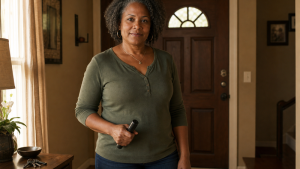
The moment your door alarm sounds, you move — toward your phone, toward a locked interior room if you have one, and toward whatever personal alarm or defense tool you keep on your nightstand. You do not go investigate quietly. The alarm already did its job by making noise; your job now is to get to safety and get help moving, in that order.
This is where a lot of women make a mistake — they hear the alarm, assume it’s nothing, and go check it out themselves. Don’t. The whole reason the alarm is loud is so you don’t have to go find out what triggered it with your body first. Call 911. Get to a room with a lock. Keep a personal alarm within reach on the nightstand for exactly this kind of moment — one press and you’ve got 130 decibels working for you while you get to a safer spot in the house.
If you live somewhere without a lot of foot traffic or close neighbors, this piece on personal alarms in remote areas and when you need a backup plan is worth reading before you ever need it, not after.
Should I get different alarms for different family situations?
Yes — the right alarm depends on who else is in the house and what you’re actually guarding against, not just the door itself. A woman living completely alone needs intrusion alarms focused outward. A household with a sleepwalker, a toddler, or a parent with dementia needs alarms focused inward too, tracking who’s leaving a room, not just who’s entering the house.
If you’ve got a family member who wanders at night, door and window alarms built for sleepwalkers are set up differently than a standard intrusion alarm — they’re watching the door from the inside. Same logic applies to alarms for kids and toddlers who might slip outside unnoticed, and to alarms for dementia patients who need that extra layer of awareness when a door opens at 3am.
A woman living alone with none of those concerns can keep it simpler — every alarm faces outward, toward the person who shouldn’t be coming in.
What’s the difference between a door alarm and a personal alarm?
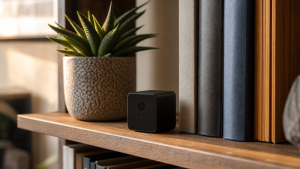
A door alarm is fixed — it stays on the door or window and only does its job there. A personal alarm travels with you, in your hand, your purse, or clipped to your keys, so it protects you the moment you step outside that door too. You need both, because the danger doesn’t stop at your threshold.
Think about your whole day, not just your home. The walk to your car. The elevator. The stretch between the bus stop and your building. A door alarm can’t help you there — but a personal alarm can. If you haven’t read it yet, this piece on the walk home covers exactly that gap, the part of the day most home security plans forget about entirely.
Frequently Asked Questions About Door Alarms for Women Living Alone
Do door alarms work on apartment doors without damaging them?
Yes. Most door and window alarms made for renters use strong adhesive strips instead of screws, so they mount securely and come off clean when you move. There’s no drilling and no landlord approval needed for this kind of temporary, renter-friendly installation.
How loud does a door alarm need to be to actually scare someone off?
Look for at least 100 decibels — that’s roughly as loud as a motorcycle engine at close range. Anything lower may not carry through walls or wake you from a deep sleep. Most quality door and window alarms sit between 100 and 120 decibels, which is loud enough to startle and deter.
Can I use the same alarm on a window and a door?
Many magnetic contact alarms work on both, since the sensor just needs the two magnetic pieces to separate. Sliding windows and sliding doors sometimes need a track-specific sensor, though, so check the packaging before assuming one style fits every opening in your home.
Will a door alarm go off from wind or a pet bumping the door?
A magnetic contact alarm only triggers when the door or window physically separates from the frame, so normal drafts or a cat brushing against a closed door won’t set it off. Motion-based alarms are more prone to that kind of false alert, which is why contact alarms are the better choice for entry points.
Should I put an alarm on my bedroom door too, even inside the house?
If you live alone in a house with multiple entry points, an interior bedroom door alarm gives you one more layer of warning and time if someone gets past your exterior defenses. It’s not overkill — it’s the same logic as a second lock, just louder.
How many door alarms should I buy for a full house, not an apartment?
Count every ground-floor door and window, plus any basement or garage access, and buy one alarm per opening. Most single-family homes need somewhere between six and ten units to cover everything properly, which is why multi-packs are usually the smarter buy.
Do I still need a personal alarm if my whole house is covered in door alarms?
Yes. Door alarms protect your home, but they can’t help you at the mailbox, in a parking lot, or on a walk. A personal alarm you carry on your keys or in your bag covers the hours you’re not standing inside your own front door.
What’s the first entry point I should alarm if I can only afford one right now?
Start with whichever entry point is least visible from the street or from your neighbors — usually a back door, a side door, or a ground-floor window around the side of the building. That’s the opening someone is most likely to test first, precisely because it’s the one nobody’s watching.
Conclusion
Walk your home one more time tonight. Count the doors. Count the windows. Every one without an alarm is a question mark, and I don’t want you living with question marks — not you, not your daughter, not your mother if she’s living alone too. Cover every entry point, keep a personal alarm within arm’s reach at all times, and let the noise do the work you shouldn’t have to do with your own two hands. Sleep easy. That’s the whole point.