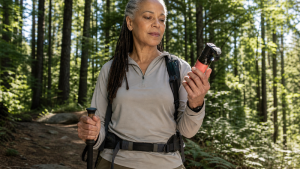
Personal alarms work. Let’s be clear about that from the start. A 130-decibel shriek in a crowded parking lot, on a city bus, in a school hallway — it stops people cold, it draws attention, and it buys you the seconds you need to get to safety. In those environments, a personal alarm is one of the best tools you can carry.
But take that same alarm three miles into the backcountry, and the math changes completely. Understanding exactly when a personal alarm does its job in remote settings — and exactly what you need when it can’t — is not optional information. It’s the difference between a real plan and a false sense of security. And you deserve the truth, not a sales pitch.
How does a personal alarm actually work in a remote area?
A personal alarm does one thing: it makes noise. Loud, disorienting, hard-to-ignore noise. At 120 to 130 decibels — louder than a jackhammer, louder than most power tools — it can startle an attacker, interrupt an assault, and signal to bystanders that something is wrong. That last function is the one that breaks down outdoors.
In populated areas, “bystanders” are everywhere. They’re in the next car, in the adjacent apartment, at the coffee shop across the street. The alarm works because people hear it and respond. In a remote area — a hiking trail, a campsite five miles from the trailhead, a rural road with no houses in sight — there may be no one within earshot at all. The alarm screams into open air, and nobody comes.
That does not make it useless. A sudden, ear-splitting alarm can still startle a human attacker badly enough to break their focus and create an opening for you to run. It can disorient wildlife. It signals distress to any other hiker who happens to be nearby, even if they’re a half-mile away. These are real benefits. But they are not the complete picture, and anyone who tells you a personal alarm is a full solution in truly remote terrain is not giving you the whole truth.
Know what your tool does. Know what it doesn’t. That’s how you build a plan that actually holds up.
When does a personal alarm provide real protection outdoors?
The answer depends almost entirely on proximity to other people. Personal alarms earn their keep in the outdoors under these specific conditions:
Trail running in popular parks. If you’re running a well-trafficked trail on a weekend morning, there are people within earshot at almost every point. A personal alarm clipped to your waistband or pack strap is a legitimate first line of defense. Pull the pin, and the people fifty yards ahead and behind you will hear it. If you’re a runner who trains outdoors, a compact alarm belongs on your body every single time you go out — not in your bag, not at home, on your body.
Campgrounds and established camping areas. Developed campgrounds have neighbors. Even if sites are spread out, 130 decibels carries. An alarm triggered at 2 a.m. in a campground will wake people up, and people waking up is exactly what you want. In this environment, a personal alarm functions much as it does in an urban setting.
Trailheads and parking areas. The start and end of any trail is where most incidents happen — not deep in the backcountry, but in the transition zone where isolated terrain meets a parking lot. A personal alarm is highly effective here. This is also a moment many people let their guard down because they’ve made it “back.” Don’t. Keep it accessible until you’re locked in your vehicle.
Guided tours, group hikes, any situation where other people are close. Distance between you and help is the determining factor. Collapse that distance enough, and the alarm works. Open it back up, and you need more.
What are the real limits of personal alarms when you’re truly off the grid?
Here they are, plainly stated, because you need to know them:
Sound dissipates over distance. 130 decibels at the source drops to roughly 107 decibels at 10 feet, and continues falling from there. Outdoors, with no walls to contain the sound, that drop is faster. A mile from the nearest person, your alarm might as well be a whisper.
Wildlife doesn’t follow a script. A personal alarm may startle some animals — and there are documented cases where sudden loud sounds deterred a bear or mountain lion. But there is no guarantee. A bear that is actively defending a kill or protecting cubs may not be deterred by noise alone. An alarm is not a bear deterrent in the same way that bear spray is a bear deterrent. These are categorically different tools.
Cell service is often nonexistent. This matters because the instinct when you’re in danger is to call for help. In remote areas, that option disappears. Your personal alarm won’t summon emergency services the way a 911 call will. You are responsible for your own early warning system when no cell tower can hear you.
Activation requires access. The most common failure point is access. If your alarm is buried at the bottom of your pack, it’s not protecting you. In a surprise situation, you have seconds. Your alarm needs to be on your person — clipped to a strap, on a carabiner, in a chest pocket — not tucked away somewhere “safe.”
What backup plan do you need when a personal alarm isn’t enough?
This is the part of the conversation that matters most. A layered approach is not optional in remote areas. Here is what a real backup plan looks like:
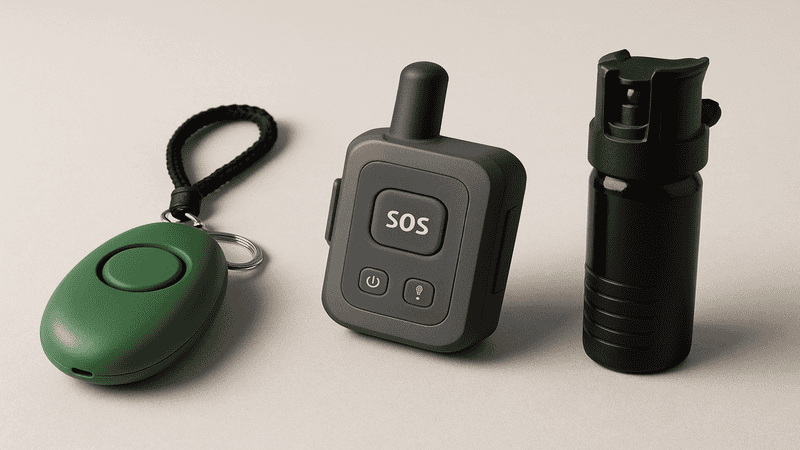
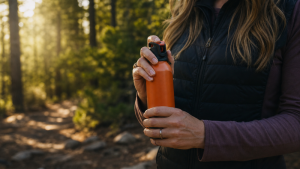
Bear spray or pepper spray with range. In remote settings, distance is your friend. A quality OC spray that reaches 12 to 18 feet gives you the ability to deter both human attackers and wildlife before they close the gap. Travelers heading into remote terrain should treat a high-concentration pepper spray as non-negotiable — as essential as water and a first aid kit. The Wildfire and Mace lines both carry formulations serious enough for outdoor use.
A satellite communicator or personal locator beacon. This is the tool that summons real help when no cell signal exists. Devices like personal locator beacons (PLBs) connect to satellites, not cell towers, and can send your GPS coordinates to emergency services from virtually anywhere on Earth. This is not a self-defense tool — it’s a lifeline. If you go remote regularly, it belongs in your kit alongside everything else.
A stun device for close-contact backup. If you’re in a situation where an attacker has closed the distance and noise alone won’t stop them, a compact stun device gives you a physical deterrent. Brands like Streetwise and ZAP make units compact enough for hiking without adding meaningful weight. Understand your state’s laws before you carry.
The knowledge to use all of it. Every tool on this list is only as good as your ability to access it and deploy it quickly and correctly. Practice matters. Know which hand reaches for what. Know how your alarm activates. Know the effective range of your spray. Rehearse it until it’s muscle memory, not a thought process you’re working through under stress.
How should you set up your personal alarm for remote outdoor use?
If you’re carrying a personal alarm in the backcountry — and you should — carry it correctly.
Mount it on the outside of your body, somewhere you can reach with either hand. A chest strap, a shoulder strap, or a hip belt attachment are all good options. Test the activation before you hit the trail. Replace batteries — or choose a rechargeable model — before any extended trip. Know the alarm’s decibel rating. Anything under 120 decibels is not loud enough to be worth relying on.
The personal alarms designed specifically for active use are built to handle sweat, light rain, and the jostling of a trail. A fragile keychain alarm that lives in a coat pocket is not the same as a purpose-built outdoor unit. Choose the right tool for the environment you’re actually in. If you’re heading into the outdoors with elderly family members, personal alarms built for seniors pair easy activation with high decibel output — a combination that matters when hands are less steady and reflexes are slower.
Is a personal alarm enough protection for solo hiking or camping?
No. Not on its own. A personal alarm is a first layer, not a complete system.
Solo hikers and campers face a specific risk profile: no witnesses, no immediate help, and an environment that gives an attacker every tactical advantage. In that context, carrying only a personal alarm is like locking only the front door of your house and leaving every window open. It signals intention without providing full coverage.
The goal is layers. An alarm for early disturbance and noise deterrence. A spray for wildlife and human threats at range. A communication device that doesn’t depend on cell towers. Situational awareness as the foundation under all of it. Each layer covers what the others can’t. Together, they constitute a real plan.
One more thing: tell someone where you’re going. The exact trailhead, your planned route, your expected return time. Leave that information with a person who will act on it if you don’t check in. No gear replaces this. It costs nothing and has saved lives that no tool could have saved.
What personal alarm features matter most for remote or outdoor use?
When you’re choosing an alarm for outdoor environments specifically, these features separate the tools worth trusting from the ones that will let you down:
130 decibels minimum. Don’t settle for less outdoors. You need every decibel you can get when there are no walls to amplify the sound.
Weather resistance. Sweat, rain, stream crossings — your alarm needs to survive contact with moisture. Look for units rated for outdoor use, not just indoor carry.
Secure but fast activation. The activation mechanism needs to work under duress — with cold hands, with gloves, with adrenaline running. Test it before you rely on it.
Long battery life or rechargeable battery. A dead alarm is no alarm. Check battery status before every trip. Many modern units use USB-C charging, which makes it easy to top off before you go.
Compact, packable form factor. You will not carry what is heavy or inconvenient. Choose something you’ll actually have on your body, not buried in your pack.
Frequently Asked Questions About Personal Alarms in Remote Areas
Will a personal alarm scare away a bear?
Sometimes, but not reliably. A sudden loud sound can startle a bear and interrupt an approach. However, a bear defending food, cubs, or territory may not be deterred by noise alone. In bear country, a 130dB personal alarm is a useful supplement — not a replacement — for bear spray, which delivers a concentrated OC deterrent at range and has a stronger documented track record with bear encounters.
How far does a 130dB personal alarm sound carry outdoors?
Sound dissipates faster outdoors than indoors because there are no walls to reflect it. A 130dB alarm can carry clearly for a few hundred yards in open terrain, but distance, wind direction, and tree cover all reduce that range significantly. In dense forest or against a headwind, effective range may be considerably shorter. Do not assume anyone more than a quarter mile away will hear it clearly enough to respond.
Can I use a personal alarm for protection against wildlife other than bears?
Yes, with limits. Sudden loud sounds can startle coyotes, deer, and other animals that are more easily frightened. Mountain lions and moose are less predictable. For wildlife encounters generally, making noise — including alarm noise — is a reasonable deterrent for animals that haven’t committed to an aggressive approach. For a charging animal, the alarm alone is not a reliable stop. Layering it with appropriate deterrents for the wildlife in your specific region is the smarter approach.
Where should I carry my personal alarm while hiking?
On your body, accessible with either hand, on the outside of your pack or clothing. A shoulder strap, chest strap, or hip belt clip are all good mounting points. Never bury it inside your pack. In a real emergency, you will not have time to open a zipper and dig through your gear. The alarm needs to be where your hand goes instinctively, not where it’s convenient to store.
Do personal alarms work if I’m injured and can’t move?
Yes — and this is one of their strongest use cases in remote settings. If you’ve taken a fall and can’t walk out on your own, triggering a 130dB alarm gives nearby hikers an audible signal of your location. It conserves your energy compared to shouting and can be activated repeatedly. This is exactly why carrying a personal alarm is still worthwhile even when you’re hiking solo in low-traffic areas — it works for injury distress signaling, not just assault situations.
Is a personal alarm better than a whistle for remote hiking?
For most situations, yes. A quality 130dB personal alarm is significantly louder than a whistle, requires less physical effort to activate, and can sustain the signal as long as you hold the activation. A whistle has the advantage of requiring no battery and being nearly indestructible, which is why serious backcountry hikers often carry both. For close-quarters situations — a fall, an encounter — the alarm’s volume advantage is meaningful.
What should I carry in addition to a personal alarm when hiking alone in remote areas?
At minimum: a high-concentration OC spray for wildlife and human threats at range, a personal locator beacon or satellite messenger for emergency communication where cell service doesn’t exist, a charged phone for areas where service is available, and basic first aid supplies. Tell someone your exact route and expected return time before you leave. A personal alarm is your first layer — these are the layers behind it that cover what the alarm can’t.
Are there personal alarms designed specifically for outdoor and trail use?
Yes. Outdoor-rated personal alarms are built with weather resistance, secure clip mechanisms that hold up to movement, and activation designs that work with cold or gloved hands. They differ meaningfully from lightweight keychain alarms built for urban carry. If you’re serious about trail safety, choose a unit designed for the conditions you’re actually going into — not whatever was cheapest or most convenient to grab.
Here is what it comes down to: a personal alarm is a real tool. It belongs