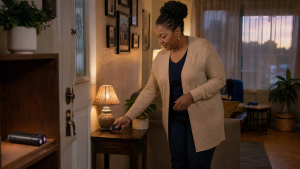
Most colleges and universities allow non-lethal self-defense tools like personal alarms, pepper spray (in most states), and certain compact keychain devices — but the rules change from campus to campus, and almost nobody explains this to incoming students. Knives and stun devices are often restricted or banned outright in dorms. The safest, most commonly permitted options are the ones students overlook: alarms, sprays under 2 oz, and a few keychain tools most schools never even think to mention in their handbooks.
What are you actually allowed to carry on a college campus?
Here’s what nobody tells you at orientation. There’s a gap — a real one — between what a school’s official policy says and what a resident advisor actually knows. I’ve talked to parents who called three different campus offices and got three different answers about whether their daughter could keep pepper spray in her dorm room. Three answers. One school.
So let me give you what I know, because I’ve had this conversation more times than I can count with parents dropping their kids off for the first time, standing in a dorm parking lot looking a little lost.
Most public and private universities permit personal alarms without question — nobody blinks at a keychain that screams. Pepper spray is typically allowed in states where it’s legal for civilian carry, usually in small canister sizes under two ounces, though some schools quietly restrict it in residence halls even when state law allows it elsewhere on campus. Stun devices and batons are where things get murky — some campuses treat them the same as a weapon, others don’t mention them at all. And knives, even small ones, are almost universally restricted in dorms, even when they’d be perfectly legal to carry on the street five minutes away.
The truth is, there’s no single answer. There’s only the answer for your school, buried somewhere in a housing agreement nobody reads past page two.
Why doesn’t every school just say what’s allowed?
I’ve wondered about this for years. My theory? Liability. A school that spells out exactly what self-defense tools are permitted is a school admitting there’s a reason students might need them. So instead, most policies stay vague — “no weapons” — and let students guess where the line falls.
That vagueness is exactly why so many students end up carrying nothing at all. Not because they decided it was unnecessary. Because they didn’t know what was safe to bring, so they brought nothing.
That’s the part that keeps me up. Not the rules themselves — the silence around them. A freshman walking back from the library at 11pm shouldn’t have to play a guessing game with her own housing contract to figure out if she’s allowed to protect herself.
What non-lethal options fly under the radar on most campuses?
There’s a short list of tools that seem to slip past even the strictest campus policies — not because they’re hidden, but because they don’t look like what people picture when they hear “self-defense weapon.”
- Personal alarms. A 130-decibel alarm clipped to a backpack or keyring rarely raises an eyebrow anywhere. It’s not a weapon. It’s noise. And noise is the one thing almost every predator wants to avoid.
- Compact pepper spray keychains. Where state law allows it, these small canisters usually pass campus scrutiny — especially the discreet designs that don’t look like a can of spray at all.
- Multi-tool keychain devices. Several of the newer self-defense keychains built for teens combine an alarm, a light, and a striking edge into something that looks more like a fashion accessory than a defense tool — which is exactly why they clear campus rules that ban anything resembling a weapon.
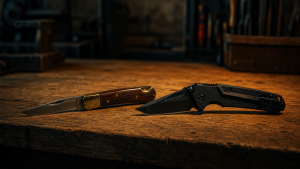
- Everyday carry knives kept off-campus. Not for the dorm, but for students who live off-campus or commute, a legally carried everyday carry knife may be entirely appropriate — just never in student housing.
What’s interesting is that the tools schools worry least about are often the ones that work best in a real encounter. A scream that won’t stop, a light in someone’s eyes, a hand that won’t let go of yours — that’s rattling in a way a weapon sometimes isn’t.
What should female students specifically carry walking alone at night?
This is the question I get asked most, usually by a mother, not a student. And here’s my honest answer — it depends less on what’s “best” and more on what she’ll actually carry every single time she walks somewhere alone.
A tool sitting in a desk drawer protects nobody. The self-defense keychains designed for women tend to win here, simply because they attach to something she’s already holding — her keys. No separate bag to remember. No fumbling in a purse at 11pm on the walk back from the library.
Layer that with a small alarm and, where legal, a compact spray, and you’ve built something realistic. Not a fortress. Just enough friction to turn a bad ten seconds into an escape. If she’s someone who runs campus loops before or after class, it’s worth reading through what female runners should carry on every route — a lot of that logic carries straight over to a nighttime walk across campus.
What happens if a school confiscates a legal item?
This is the part almost nobody prepares students for. Even a completely legal item — legal by state law, legal by campus policy on paper — can still get pulled during a room inspection if an RA doesn’t recognize it or misjudges it as a weapon.
It happens more than you’d think with anything that looks unusual — a telescopic baton, for instance, tends to draw immediate attention even in states and campuses where it’s technically permitted, simply because it resembles police equipment. If a student wants to carry a telescopic baton for self-defense, it’s worth doing the homework on that specific school’s housing policy first, in writing, saved somewhere retrievable — not just a verbal answer from someone at a front desk.
The safest move, always, is to keep documentation. A screenshot of the policy. An email from housing services. Not because you expect trouble — because paper trails end arguments before they start.
How do students figure out their specific school’s real policy?
Don’t ask the RA. Don’t ask a hallmate who “heard” something. Go straight to the student housing handbook — the actual PDF, not the summary page — and search for the word “weapon.” That’s usually where the real rules hide, three sections deep, phrased in language that was clearly written by a lawyer, not a safety officer.
If it’s still unclear, call campus public safety directly and ask them to confirm in writing. Most will. It takes five minutes and it removes all the guesswork that gets so many students carrying nothing at all out of fear of breaking a rule they were never shown.
Frequently Asked Questions About Self Defense on Campus
Can college students carry pepper spray in their dorm room?
In most states where civilian pepper spray is legal, students can typically keep a small canister in their dorm room, though some universities add their own restrictions on top of state law. Always confirm with campus housing directly, since dorm policy sometimes differs from general campus policy.
Are stun guns allowed on college campuses?
It varies significantly by school and by state. Some campuses treat stun devices the same as firearms and prohibit them entirely, while others allow them under general self-defense provisions. Because this is one of the murkiest categories, get written confirmation from campus safety before bringing one to a dorm.
What self-defense keychain is best for a teen heading to college?
Look for a keychain that combines a personal alarm with a light or a discreet striking edge, since these tend to clear most campus policies without issue. A self-defense keychain built specifically for teens is designed with this exact balance in mind — practical, legal in most places, and unobtrusive enough not to draw unwanted attention from housing staff.
Can I carry a knife on campus for self-defense?
Almost every college restricts knives in dormitories, even small folding knives that are perfectly legal to carry elsewhere. If you’re commuting or living off-campus, a legal self-defense knife may make sense for the commute itself — just never bring it into student housing without confirming policy first.
What’s the loudest personal alarm allowed on most campuses?
Personal alarms in the 120–130 decibel range are almost universally allowed since they’re not classified as weapons under any policy we’ve seen. Volume that loud is genuinely startling in an enclosed hallway or stairwell — often enough on its own to interrupt a bad situation before it escalates.
Do RAs actually search dorm rooms for weapons?
Room inspections vary by school, but many do occur, especially at the start and end of semesters or after a reported incident. Items that are legal but visually resemble weapons — like batons — are the most likely to get flagged even when technically permitted, so documentation of your school’s actual policy matters.
What should I do if campus security confiscates a legal item?
Ask for a written explanation of which policy was violated and request the item be returned once you’ve provided documentation. Having a saved copy of the housing handbook section or an email confirmation from campus safety in advance makes this conversation far shorter and far less stressful.
Is it better to carry a spray or an alarm on campus?
Neither replaces the other — they solve different problems. A spray creates physical distance and disorientation; an alarm draws immediate attention and help. Many students carry both, and it’s worth comparing which spray formula actually makes sense to carry alongside whatever alarm they choose.
There’s a version of campus safety nobody talks about at orientation — the quiet gap between the rules written down and the rules actually enforced. Most students never close that gap. They just carry nothing and hope for the best, or they carry something and hope nobody asks questions. Neither is a real plan.
The better path is the boring one. Read the handbook. Call the office. Get it in writing. Then carry something that fits inside those lines — quietly, legally, and every single day, not just the nights that feel unsafe. That’s how you close the gap for good.