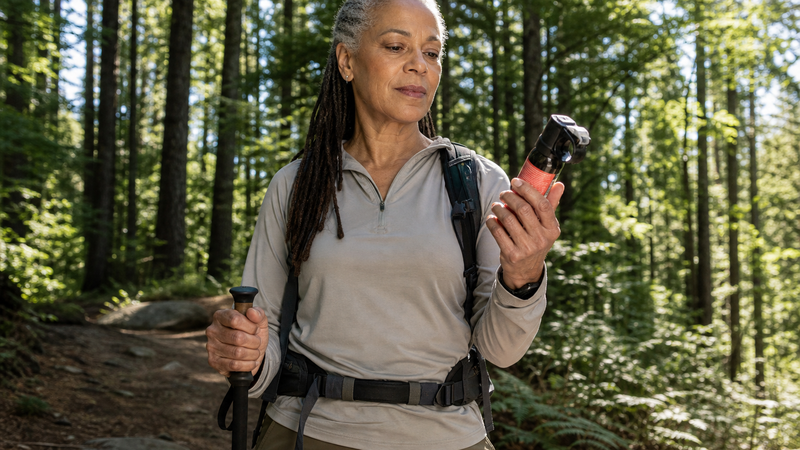
Bear spray lasts between two and four years from its manufacture date — most canisters carry a printed expiration date right on the label, and that date is the line you do not cross. After that point, the propellant pressure drops, the OC concentration degrades, and you cannot count on it to stop a charging bear. Check the label before every trip. Replace it when it expires. There is no gray area here.
That is the short answer. Now let me give you the full picture, because most people buying bear spray for the first time have no idea what they are actually holding — and that ignorance can get them hurt. This canister is not a trophy you buy once and toss in the gear bag forever. It is a precision tool with a shelf life, and knowing that shelf life is the first thing a serious person does before they ever set foot on a trail.
Where Is the Expiration Date on a Bear Spray Canister?
Look at the bottom of the canister first. Most manufacturers stamp or print the expiration date on the base, the side label, or sometimes around the top rim near the safety clip. It may read as a month and year — “EXP 09/2027” — or it may be a manufacture date with the expectation that you understand the two-to-four-year window yourself. Either way, it is there. Read it before you buy and read it before you pack.
If you buy a canister and cannot find a clear date anywhere on it, that is a problem. Put it down and find one that is properly labeled. Reputable bear spray will always carry this information. If a can is missing it, you do not know what you are holding or how long it has been sitting in a warehouse. That is not the canister you want between you and a grizzly.
One more thing: the manufacture date and the purchase date are not the same thing. A canister sitting on a store shelf for eighteen months before you buy it has already burned through half its useful life. Check the date at the register, not when you get home. If a retailer is selling canisters that expire within the year, ask them to pull fresh stock or shop somewhere else.
What Happens to Bear Spray After It Expires?
Two things degrade in an expired canister: the propellant and the active ingredient. The propellant — compressed nitrogen or a similar gas — slowly loses pressure over time. That means even if the OC resin inside is still somewhat potent, the can may not be able to push it the full 25 to 35 feet you need to create a barrier between yourself and an animal. A can that sprays six feet instead of thirty is not bear spray. It is a very expensive way to make a bear angry.
The OC resin itself — that is the oleoresin capsicum, the concentrated hot pepper extract — also breaks down chemically over time. Heat cycles, UV exposure, and simple time all work against it. An expired canister may still produce a cloud, but whether that cloud carries enough capsaicin concentration to overwhelm a bear’s nervous system is a question you do not want answered in the field.
If you are curious how bear spray and traditional pepper spray compare in terms of chemistry and field effectiveness, my post on whether pepper spray works on bears breaks that down clearly. The short version: formulation and deployment speed are everything, and both depend on a can that is in date and properly pressurized.
How Should You Store Bear Spray to Maximize Its Shelf Life?
Storage determines whether your canister makes it to its expiration date in full working condition or degrades well before it. Heat is the primary enemy. A car left in summer sun can reach 160 degrees inside — that kind of sustained heat will compromise the propellant pressure and accelerate OC breakdown faster than almost anything else. Never leave a bear spray canister in a hot vehicle for extended periods.
Store it in a cool, dry place: a basement shelf, a climate-controlled gear closet, or in a case with your hiking equipment stored indoors. Direct sunlight through a window can also degrade the canister over months, so keep it away from window ledges and sunny spots. The goal is a stable, moderate temperature — nothing extreme in either direction.
For a complete breakdown of temperature limits, vehicle risks, and what actually happens when bear spray is stored wrong, read my post on storing bear spray safely. That post goes deep on the specifics, and if you live somewhere with brutal summer heat, it is required reading before your next season.
How Do You Safely Dispose of an Expired Bear Spray Canister?
Do not throw an expired canister in the trash. It is a pressurized aerosol, and pressurized aerosols do not belong in landfills or household recycling bins. The canister can rupture under compression in a garbage truck and cause injury. Treat it like you would any pressurized household product.
Most hazardous household waste programs accept pressurized aerosol canisters. Check with your county waste management department for drop-off locations and dates. Many outdoor retailers and gear co-ops also run periodic collection events for expired canisters — call ahead and ask. Some manufacturers provide specific disposal guidance on their packaging or websites.
If the canister still has pressure and you are outdoors in a safe, open area far from people and traffic, some experts suggest a controlled discharge into an area with no people, animals, or wind blowing toward you — but only if local regulations permit it and you can do so without any risk to others. When in doubt, take it to a hazardous waste facility. That is the clean answer.
How Long Does Bear Spray Stay Effective Once Deployed?
This is a different question from shelf life, and it matters. A cloud of deployed bear spray disperses quickly — the initial burst creates an immediate barrier that can stop a charging animal, but that cloud does not linger as a protective zone for more than a few seconds in open air. Wind, rain, and terrain all affect how long the aerosol stays concentrated in front of you.
What matters is deployment strategy, not duration. You are not creating a wall — you are creating a moment. A powerful, disorienting, overwhelming moment that gives you time to back away and get clear. My post on bear spray canister duration and how many seconds you actually get covers exactly what to expect from a real deployment — including why most people dramatically overestimate how long the spray lasts and underestimate how close a bear can be before they need to act.
Know your canister. Know how many seconds of spray it holds. Practice the draw before you need it. The worst time to discover you do not know how to pull the safety clip is when a 400-pound animal is at 60 feet and closing.
Is Bear Spray Different From Personal Pepper Spray for Everyday Carry?
Yes — and the differences are significant enough that the two are not interchangeable. Bear spray is specifically formulated and regulated to meet EPA requirements for use on large animals. It delivers a higher volume, a wider cloud dispersal pattern, and greater range than standard personal pepper spray. The canister is larger. The deployment is different. You do not wear it on a keychain.
Personal pepper spray — the kind designed for everyday self-defense use — is formulated differently, comes in smaller sizes, and is built for close-range, targeted deployment. Both use OC as the active ingredient, but the concentration, carrier solution, and delivery mechanism are engineered for different threats at different distances. If you want to understand the difference in delivery patterns for everyday carry, my breakdown of gel pepper spray versus stream formulas covers the practical distinctions that matter in real-world situations.
For everyday urban carry, bear spray is the wrong tool — it is too large, the range is excessive for indoor or close-contact situations, and in most states it is regulated differently than personal defense sprays. For backcountry travel in bear habitat, personal keychain sprays are insufficient. Use the right tool for the right threat.
Frequently Asked Questions About Bear Spray Shelf Life
How long does bear spray last after purchase?
Bear spray typically lasts two to four years from the manufacture date, which is printed on the canister. Purchase date and manufacture date are not the same — a can that sat on a shelf for a year before you bought it has already burned through part of its useful life. Always check the expiration date at the time of purchase and replace the canister before it expires.
Can I use bear spray that expired last year?
You should not. An expired canister may have lost propellant pressure, reduced OC potency, or both. It may still discharge, but there is no guarantee it will reach the range or concentration needed to stop a charging bear. When a bear is closing at 35 feet, you need certainty — not a maybe. Replace expired canisters before your next trip into bear country.
Does bear spray expire faster in hot weather?
Yes. Sustained heat — particularly inside a parked vehicle in summer — accelerates propellant pressure loss and chemical degradation of the OC resin. A canister stored in ideal conditions may reach its full two-to-four-year life span. One subjected to repeated heat cycles may degrade significantly faster. Store bear spray in a cool, climate-controlled location when not in active use.
How do I know if my bear spray is still good?
Check the expiration date first — that is your most reliable indicator. Beyond that, a can in good condition will feel pressurized and solid when you shake it gently. If it sounds hollow or rattles, pressure may be compromised. The safety clip should engage and release cleanly. If anything feels off, do not trust it in the field. Replace it.
What should I do with my expired bear spray canister?
Do not throw it in the regular trash. Pressurized canisters belong in hazardous household waste programs, which most counties operate on a drop-off or event schedule. Some outdoor retailers also collect expired canisters periodically. Check with your local waste management authority for the nearest option. Never puncture, incinerate, or crush a pressurized canister.
How is bear spray different from regular pepper spray?
Bear spray is larger, has greater range (25 to 35 feet), and delivers a wide aerosol cloud designed to create a barrier against large animals. Personal pepper spray is smaller, designed for close-range targeted deployment against human threats, and is formulated and regulated differently. They are not interchangeable. Use bear spray in bear habitat, personal defense spray for everyday carry.
Can bear spray be used for personal self-defense against people?
Legally, bear spray is not classified the same way as personal defense sprays in most jurisdictions, and using it on a person may carry different legal implications depending on your state. It is not designed or tested for that application. For personal self-defense, carry a product specifically formulated and legally designated for human threat deterrence. Check your local laws before carrying any pepper-based product.
How often should I replace my bear spray?
Replace your bear spray on or before the printed expiration date — every two to four years depending on the brand and formulation. If you use it in the field for any reason, replace it immediately even if the canister is not empty. Partial canisters cannot be counted on to deliver a full deployment when it matters. A fresh, full canister before every season is the standard to keep.
You check the oil in your car. You replace the batteries in your smoke detector. Bear spray is no different — it is a safety tool with a maintenance schedule, and skipping that schedule because the can looks fine is the kind of shortcut that costs people everything. Before your next trip into bear country, pull that canister out right now, find the expiration date, and decide whether it goes back in your pack or into a hazardous waste collection. That one check, done right now, is what serious preparation looks like.
And if you are ready to look at what else belongs in your safety kit — whether you are headed into the backcountry or just want solid protection closer to home — browse what we carry at Tracey’s Safety. Everything here was put here for a reason.