The self-defense tools that actually work at 2 AM are the ones designed for exhaustion, not adrenaline — one-handed operation, no aim required, and built to survive drops, cold, and shaky hands. That means personal alarms loud enough to wake a parking lot, stun devices with no-slip grips, and pepper sprays with UV marking dye and flip-top safety designed for someone running on four hours of sleep. Anything that requires precision or a clear head at 2 AM is the wrong tool for 2 AM.
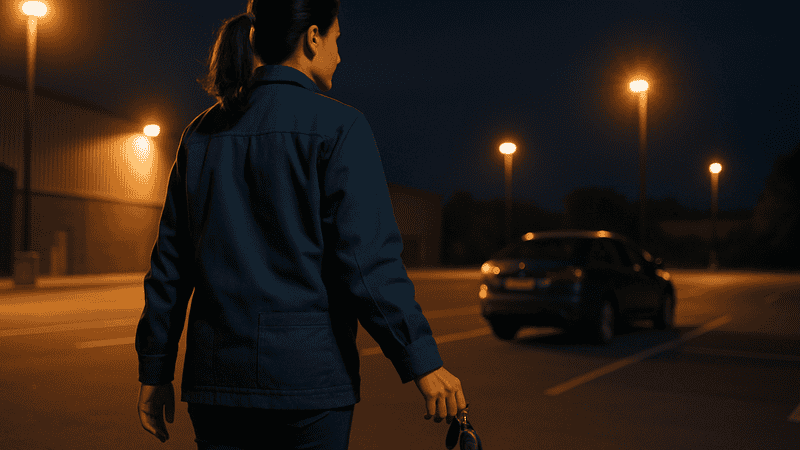
Here’s something nobody tells you when you take a night shift job: everything you learned about self-defense assumes you’re wide awake. Every article, every video, every “how to use pepper spray” demo — it’s all filmed by someone who slept eight hours and had coffee. That’s not you at 2:14 AM when your shift ends and you’re walking to a car that’s parked under the one busted light in the lot.
I started paying real attention to this after talking to enough warehouse workers, ER nurses, and delivery drivers to notice a pattern: the gear that works in a demo video is often the gear that fails in real life, at the real hour, on the real body of someone who’s running on fumes. So let’s talk about what actually holds up — not what looks good on a shelf.
Why don’t regular self-defense tools work as well at 2 AM?
Regular self-defense tools are designed and tested by people who are alert, calm, and have both hands free. At 2 AM, none of that describes you. Your fine motor skills are down. Your reaction time is slower. You’re probably carrying a bag, a lunch cooler, maybe car keys already fumbling in one hand. A tool that demands precision — a safety you have to flip just right, a trigger with a stiff pull, a spray pattern you have to aim carefully — becomes a liability instead of a solution.
This is the part most safety content misses entirely. It’s not that night shift workers need different categories of tools. It’s that they need the same categories engineered for a completely different physical and mental state. A stun gun that works great for a rested suburban dog-walker at 6 PM might sit unused in a purse at 2 AM because the safety mechanism took two tries to disengage — and two tries is one too many.
The innovation here isn’t flashy. It’s ergonomic. It’s about designing for the tired hand, not the confident one.
What should a night shift self-defense tool actually do without thinking?
It should work with almost no cognitive load — no aiming, no multi-step activation, no fine motor precision. Think big buttons, obvious grips, and single-motion operation. A tool you can trigger correctly on the first try, half-asleep, adrenaline dumping into your system, is worth more than a tool with twice the “stopping power” on paper.
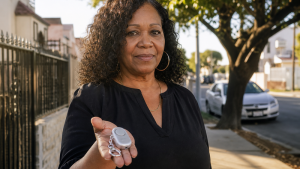
This is where a lot of new personal alarm designs have actually gotten smarter. The personal alarms built for this crowd now come with pull-pin activation that works even if your hands are shaking, and clip directly to a keychain so there’s no digging through a bag at 2 AM. The Streetwise attack alarm is a good example — pull, it screams, you run. No thinking required.
Stun devices have caught up too. The newer designs, like the ZAP stun gun flashlight combo, put the stun trigger and the flashlight function on the same grip, so you’re not fumbling between two separate tools in the dark. That’s a small design change that makes a real difference when your hands are cold and your brain is running on autopilot.
Does pepper spray work differently for night shift workers?
Yes — the innovation that matters most for night shift workers isn’t the spray formula, it’s the delivery mechanism. Standard stream sprays require some aim, and aim is the first thing to go when you’re exhausted and scared. Fog and foam patterns are more forgiving because they cover a wider area, which matters a lot more at 2 AM than it does in a well-lit training session.
Look for pepper spray with a flip-top safety you can operate with your thumb without looking at it, a UV marking dye for later identification, and a keychain clip so it’s already in your hand before you even leave the building. The pepper spray options built for exactly this — smaller, keychain-ready, no-aim-required — are worth a closer look, and something like the Mace triple action pepper spray combines the spray with a built-in alarm and UV dye, so one tool does three jobs when you don’t have the bandwidth to think about three separate tools.
What’s the most overlooked tool for people working graveyard shifts?
The most overlooked tool isn’t a weapon at all — it’s a light. A tactical flashlight with a strobe function disorients someone approaching you in the dark far more effectively than most people expect, and it doubles as a completely legal, completely ordinary object to carry anywhere, any shift, any state. It’s the innovation nobody markets loud enough: light as a self-defense tool.
A bright strobe at close range genuinely messes with someone’s vision and depth perception for a few seconds — and a few seconds at 2 AM in an empty lot is everything. It also means you’re not walking to your car fumbling for your phone flashlight, which is its own quiet safety upgrade nobody talks about. Pair a strobe flashlight with a personal alarm and you’ve covered light, noise, and confusion — three deterrents, zero aim required.
How is night shift self-defense gear different for nurses, drivers, and warehouse workers?
The core need is the same — one-handed, no-aim, low-cognitive-load tools — but the environment changes what fits. Nurses need something that survives a scrub pocket and doesn’t set off metal detectors or interfere with patient care. Drivers need something that clips onto a lanyard or dash and complies with whatever their employer and local laws allow. Warehouse workers need something built to survive drops onto concrete, temperature swings, and gloved hands.
If you’re in scrubs, our piece on the tools worth keeping in your scrubs pocket goes deeper into what fits a nurse’s actual workday. If you’re behind the wheel, what delivery drivers need to know about carrying tools at work covers the legal gray areas most drivers don’t think about until it’s too late. And if you’re clocking out of a warehouse at 3 AM, personal protection built for rough environments walks through gear that actually survives that world.
What’s the smartest way to actually carry these tools so they’re ready at 2 AM?
The smartest carry method is whatever gets the tool into your hand before you leave the building — not after you’re already in the parking lot. That means clipping your alarm and your spray to the outside of your bag or your keys, not burying them at the bottom where you’ll never find them at 2 AM with shaking hands.
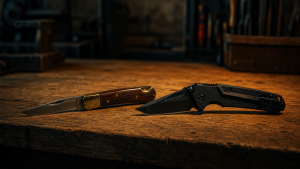
A lot of workers are switching to combo tools for exactly this reason — fewer things to grab means fewer decisions to make when you’re exhausted. A device like the multi-function keychain tools that combine an alarm, a light, and sometimes a small blade or breaker tip into one unit is a genuinely smart design shift, because it means one motion — grabbing your keys — puts everything you need in your hand at once.
Frequently Asked Questions About Self-Defense Tools for Night Shift Workers
What is the best self-defense tool for someone walking to their car alone at night?
A personal alarm clipped to your keys is the best starting point because it requires zero aim and works even if you’re exhausted or startled. Pair it with a strobe flashlight or a keychain pepper spray for layered protection — noise, light, and a chemical deterrent covers most situations a tired night shift worker actually faces.
Can I carry pepper spray at work if I’m on the night shift?
In most states, yes, though workplace policies vary and some employers restrict certain items on-site. Check your specific state’s regulations and your employer’s handbook before carrying it into a building, though carrying it in your car or on your walk to and from work is typically far less restricted.
Why do stun guns feel harder to use at night than during the day?
Because most stun guns are designed assuming steady hands and clear thinking, both of which are in short supply at 2 AM. Look for models with an oversized, textured grip and a simple, single-motion safety switch — these reduce the fumbling that happens when you’re tired, cold, or scared.
Is a flashlight really considered a self-defense tool?
Yes. A bright strobe-capable flashlight disorients an approaching person for several seconds, which is often enough time to get to your car or a safe location. It’s also legal virtually everywhere and doubles as a practical tool for a dark parking lot or stairwell.
What should I look for in a personal alarm for night shift work?
Look for at least 130 decibels of sound, a pull-pin or push-button activation that works with cold or shaking hands, and a keychain attachment so it’s always with you. The simpler the activation, the more reliable it’ll be when you actually need it.
Do combo tools that include an alarm, light, and spray actually work well?
Yes, and they’ve become smarter in recent years specifically because manufacturers started designing for tired, distracted users rather than perfectly alert ones. One device means one decision instead of three, which matters enormously in a real moment of stress.
How do I know if a self-defense tool is actually designed for tired hands versus just marketed that way?
Test it in a dark room with your eyes closed. If you can find the activation point, engage it, and use it correctly without looking, it’s designed for real 2 AM conditions. If you need to look closely or use two hands to figure it out, it’s built for a demo video, not your actual shift.
What’s one thing night shift workers overlook when choosing self-defense tools?
Battery reliability. A stun device or alarm that’s been sitting in a bag for six months with a dead battery is worse than useless — it’s false confidence. Choose devices with long shelf-stable batteries or test yours monthly, the same way you’d check a smoke detector.
The truth is, nobody designs their life around 2 AM. But if that’s your shift, your gear should be designed around it anyway. The smartest safety tools aren’t the ones with the flashiest specs — they’re the ones built for exactly the tired, distracted, running-on-empty version of you that’s walking through that parking lot tonight. Choose gear that meets you there, not the rested version of you that only exists in a demo video.