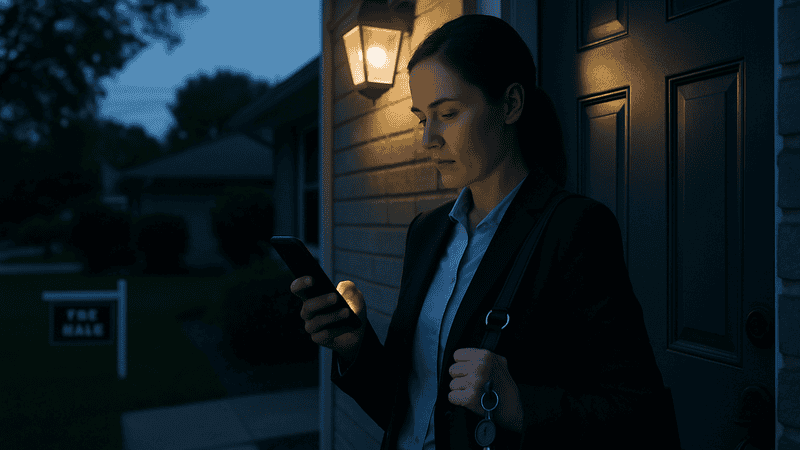
Night showings put real estate agents alone in empty houses with strangers they’ve often just met online — a combination that has led to real assaults and disappearances in this industry. Smart agents treat every after-hours showing like a safety protocol, not just an appointment: they verify the client beforehand, share their location with someone, carry a reliable alarm or deterrent device, and never let themselves get boxed into a room without an exit. This isn’t paranoia. It’s the standard now.
Why are night showings so dangerous for real estate agents?
Because you’re doing everything wrong that a self-defense instructor would beg you not to do — and you’re doing it for a living. You’re meeting someone you’ve never laid eyes on. You’re going to a property that’s often empty, sometimes vacant for weeks, sometimes in a part of town you don’t know well. You’re going alone, after dark, and you’re the one holding the keys and the flashlight while a stranger walks behind you from room to room.
I want you to sit with that for a second. Empty house. Unfamiliar buyer. No neighbors close enough to hear you. No coworkers down the hall. This is the exact setup that predators look for — not because every buyer is dangerous, but because the few who are will look for precisely this opportunity. Agents have been assaulted. Agents have been robbed. Agents have gone missing after a showing that started with nothing more than a phone call and a listing address. This industry knows it. The National Association of Realtors has put out safety guidance for years because the pattern is real and it keeps repeating.
None of this means you stop doing your job. It means you stop doing it unprotected.
What should agents do before they ever agree to a night showing?
Verify the person you’re meeting before you agree to meet them alone. Get a full name, a phone number that isn’t a burner, and ideally a photo ID confirmation or a pre-approval letter from a lender. If a “buyer” is cagey about basic information, that’s your answer right there — reschedule for daylight, bring a colleague, or require an office meeting first.
Tell someone exactly where you’re going. Not a vague “showing a house tonight” text — the actual address, the client’s name and number, and the time you expect to be done. Set a check-in time with that person. If you don’t check in, they call you, and if you don’t answer, they call the police. This takes thirty seconds and it is the single most effective thing an agent can do to change the odds in her favor.
Look at the property itself before you commit to the appointment. Is it vacant? Is it isolated? Are there working lights inside and out? If the answer to any of those raises a flag, that’s information — use it to decide whether this is a solo showing or a bring-a-partner showing.
What should agents carry to every night showing?
Something loud, something you can reach in under two seconds, and something you’ve actually practiced using. That’s the whole checklist. It doesn’t need to be complicated.
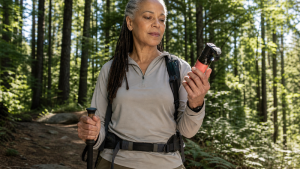
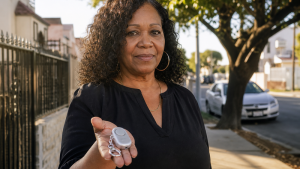
A personal alarm clipped to your bag or belt loop is non-negotiable in my book. A 130-decibel alarm is louder than a chainsaw running six feet from your ear — loud enough to stop someone in their tracks and loud enough to bring a neighbor to their window. The Mace personal alarm and the Streetwise alarm are both compact enough to live on a keychain and require zero aim, zero charging fuss, and zero hesitation. You pull the pin, it screams, you run.
Pepper spray earns its place in your bag too. Something like Wildfire pepper spray or a Pepper Shot canister gives you distance — you don’t have to be within arm’s reach to stop someone. Ten seconds of burning eyes and a closed throat is ten seconds you use to get out the front door and into your car.
Some agents also carry a compact stun device like the ZAP stun gun or a Runt stun gun for close-range situations — small enough to disappear into a blazer pocket, powerful enough to matter if someone gets hands-on. Whatever you choose, the rule is the same: carry it where you can actually get to it, not buried at the bottom of a tote bag under your listing binder.
How should agents move through the house during a showing?
Never let the buyer walk behind you, and never let yourself get backed into a room with only one way out. This is basic and it is also the thing agents forget the fastest once they’re in showing mode, talking about square footage and school districts.
Walk beside the buyer, not in front of them, whenever the layout allows it. Let them enter a room first when you can — you want eyes on them, not your back to them. Avoid small enclosed spaces like walk-in closets or basements when you’re alone with someone you just met; if you must show those spaces, gesture them in and stay near the doorway yourself.
Keep your phone in your hand or your pocket, not in your bag across the room. Keep your car keys on your person, not left on a kitchen counter while you walk the second floor. These sound like small things. They are the small things that keep an escape route open.
How does technology help agents stay safer at empty listings?
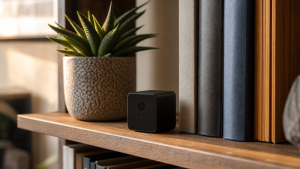
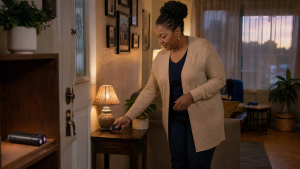
It gives you a witness even when nobody’s physically there. A hidden or visible camera placed near the entry of a vacant listing can record who comes and goes — useful for verifying a buyer showed up alone as promised, and useful after the fact if something goes wrong. If you’re weighing options for a listing you show often, our breakdown on choosing between a fake and a real security camera walks through what actually deters trouble versus what just looks like it does.
Location-sharing apps matter here too. Share your live location with your check-in contact for the duration of the appointment, not just a text before you walk in. If your phone has an SOS feature, know exactly how to trigger it with your phone in your pocket, screen off, without looking down.
What does a smart night-showing protocol actually look like start to finish?
Verify the buyer’s identity and financing before scheduling. Choose daylight or a paired agent for any property that’s vacant, isolated, or flagged by instinct. Text your location and expected end time to a trusted contact with a check-in window. Carry a personal alarm and pepper spray where you can reach them in under two seconds. Park facing the exit, keys in hand before you even walk to the door. Let the buyer walk in front of you through interior spaces. Trust the feeling in your gut over the pressure to be polite — that feeling has kept more agents safe than any script ever has.
This isn’t a burden you carry because the job is dangerous. It’s a rhythm you build so the job stops feeling dangerous. Agents who do this consistently tell me it becomes second nature within a few showings — like checking your mirrors before you back out of a driveway. You stop noticing you’re doing it. You just do it.
Frequently Asked Questions About Night Showing Safety
Is it ever okay for a real estate agent to do a night showing completely alone?
It can be, but only after you’ve verified the buyer’s identity, confirmed their financing status, and told a trusted contact your exact location and expected end time. If any of those steps feel uncertain, bring a colleague or reschedule for daylight. Trust your gut over your calendar.
What’s the best personal alarm for real estate agents to carry?
Look for one rated around 130 decibels with a pull-pin activation — no buttons to fumble with in a panic. A clip-on personal alarm that attaches to a keychain or bag strap works best because it’s already in reach the moment you need it.
Should agents carry pepper spray to every showing?
Most agents who show properties after dark do, and for good reason — it creates distance a stun device can’t. Compact options like Wildfire or Pepper Shot canisters fit easily in a blazer pocket or bag side pouch and give you several feet of separation from someone closing in.
How do I check if a listing appointment is a real buyer or a scam?
Ask for a full name, working phone number, and a lender pre-approval letter before confirming the appointment. Legitimate buyers rarely hesitate to provide this. If someone pushes back hard on basic verification, treat that resistance as your answer.
What’s a good check-in system for solo showings?
Text a trusted contact the address, buyer’s name, and expected end time before you go in. Set a specific check-in time — if you miss it, that person calls you immediately, and calls the police if you don’t respond within a few minutes.
Are hidden cameras a good idea for vacant listings?
Yes, particularly for properties shown repeatedly or left vacant for extended periods. A camera near the entry documents who comes and goes, which helps confirm a buyer arrived alone as expected and provides a record if anything happens later.
What should I do if a showing feels wrong the moment I arrive?
Trust that feeling immediately. Stay near the exit, keep your phone accessible, and don’t hesitate to cut the appointment short with a simple excuse. No commission is worth ignoring your instincts.
Do these safety steps apply to other night-shift workers too?
Absolutely — the core principles of verification, check-ins, and carrying a reliable alarm or deterrent apply broadly. If you want more on this, our guides on self-defense tools for night shift workers and personal protection for night shift warehouse workers cover the same ground for other professions facing similar risks.
Every agent I’ve talked to who’s had a scare says the same thing afterward: they wish they’d taken it seriously before, not after. You don’t need to wait for a close call to start treating night showings like the risk they are. Pack the alarm. Send the text. Trust the gut. Come home. That’s the whole job behind the job.